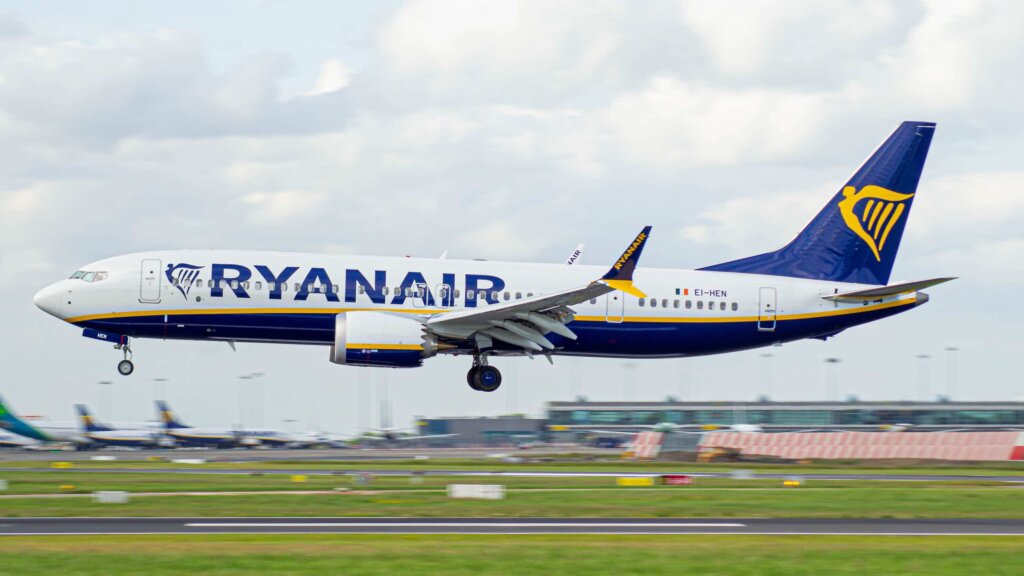
Ryanair, la compagnia aerea low cost N. 1 in Italia, ha annunciato oggi (giovedi 11 dicembre) che il primo volo della sua nuova rotta invernale 2025 Torino-Liverpool decollerà questa settimana, sabato 13 dicembre. Ryanair opererà 1 volo a settimana su questa nuova entusiasmante rotta invernale 2025/2026, offrendo ai clienti italiani e piemontesi ancora più scelta e collegamenti regolari ai prezzi più bassi d’Europa.
Fabrizio Francioni, Head of Communications Italy di Ryanair, ha dichiarato:
“Siamo entusiasti di vedere decollare questa settimana il primo volo della nostra nuova rotta invernale 2025 Torino-Liverpool. Questo collegamento rafforza ulteriormente Torino e le montagne piemontesi come destinazione privilegiata per le vacanze invernali per i turisti provenienti dal Regno Unito, collegando al contempo il capoluogo del Piemonte con una città vivace, nota per il suo patrimonio musicale e il suo iconico lungomare, perfetta per un city break invernale.
Questa rotta è solo una delle 31 presenti nel nostro programma invernale 2025 da/per Torino, dove quest’inverno Ryanair offrirà 1,5 milioni di posti a tariffe low cost, con un incremento del 30%. Per la prima volta in assoluto, inoltre, avremo un terzo aeromobile basato a Torino durante l’inverno, per un investimento complessivo di 300 milioni di dollari.
Collaborando strettamente con il team di Torino Airport, abbiamo dimostrato che tariffe competitive e operazioni efficienti sono la chiave per favorire la crescita. Per andare oltre, Ryanair invita il governo italiano a eliminare l’addizionale municipale in tutti gli aeroporti. Se venisse rimossa, Ryanair risponderebbe con un piano di crescita per l’Italia che prevede 40 aeromobili in più, 20 milioni di passeggeri aggiuntivi, 250 nuove rotte e 15.000 nuovi posti di lavoro in tutta Italia.”
Andrea Andorno, Amministratore Delegato di Torino Airport ha commentato:
“Siamo felici che Ryanair avvii il nuovo volo Torino-Liverpool per la stagione invernale 2025/2026. Con l’aggiunta di questa nuova destinazione, saranno 7 gli aeroporti del Regno Unito collegati direttamente a Torino da Ryanair, confermando l’importanza di questo mercato per il nostro territorio. La crescita di Ryanair sul nostro scalo, con l’aggiunta del terzo aeromobile in base, ci consente di offrire ai nostri passeggeri non solo nuove mete, ma l’inverno più ricco di sempre: moltissime destinazioni servite, come Londra Stansted, Madrid, Dublino, Porto, Brussels Charleroi, Copenaghen, Malta, Marrakech e Siviglia registrano infatti forti aumenti nelle frequenze settimanali”.
L’intero operativo invernale 2025 di Ryanair è disponibile per la prenotazione su Ryanair.com

-1M SEATS, -5 AIRCRAFT, -20 ROUTES & THOUSANDS OF JOBS AT RISK
Ryanair, Europe’s No. 1 airline, today (Tues, 9 Dec) announced it will cut -1m seats (-22%), 5 based aircraft (loss of US$500m investment), and 20 routes from its Brussels Winter 26/27 schedule as a result of the Belgian Govt’s backward decision to double its harmful aviation tax to €10 per departing passenger from 2027, and the Charleroi city council’s proposal to introduce a €3 per departing passenger tax from next year on passengers travelling from the airport. This significant increase to access costs – which was already hiked up +150% in July (just 5 months ago) – makes Belgium completely uncompetitive compared to other EU markets like Sweden, Hungary, Italy, and Slovakia, where Govts are abolishing aviation taxes to drive traffic, tourism, and jobs. Even Germany has now recognised that aviation taxes don’t work and has revised its decision to increase aviation taxes.
If the Govt really wants to revive Belgium’s economy, they should abolish this harmful aviation tax to generate more traffic and tourism, not double it. Ryanair calls again on Prime Minister De Wever and his Govt to abolish the aviation tax or Belgian traffic will collapse and fares will soar, just as they have done in Austria & Germany, where Govt’s repeatedly increased access costs. Ryanair has today (Tues, 9 Dec) written to Prime Minister De Wever, Transport Minister Crucke, Wallonia Minister of Airports, Cécile Neven, and the Mayor of Charleroi, Thomas Dermine, to call for the reversal of these increases.
Ryanair’s Jason McGuinness said:
“The De Wever Govt has bizarrely decided to further increase Belgium’s already sky-high aviation tax by another +100% from Jan 2027, on top of the +150% in July last. These repeated increases to this harmful aviation tax make Belgium completely uncompetitive compared to the many other EU countries, like Sweden, Hungary, Italy, and Slovakia, where Govts are abolishing aviation taxes to drive traffic, tourism, and jobs. As a result of this second tax hike in just 5 months, Ryanair has been forced to cut -22% of its Brussels traffic (-1m seats), -5 aircraft from our Charleroi base (loss of US$500m investment), and 20 routes (13 from Charleroi & 7 from Zaventem) for Winter 26/27. Should the Charleroi city council proceed with its ill-judged proposal to introduce further taxes on passengers departing from Charleroi next year, these cuts will deepen as Ryanair will be forced to reduce flights, routes and based aircraft at Charleroi from as early as April 2026 with thousands of local jobs at risk.
If Prime Minister De Wever and his Govt really wanted to revive Belgium’s economy, they should abolish this harmful aviation tax, not double it. Despite so many other EU countries taking this step to support their economies, Belgium is going in the opposite direction, driving up access costs and pushing airlines and tourism elsewhere. We urge Prime Minister De Wever to scrap this damaging aviation tax before Belgian’s traffic, tourism, jobs, and the wider economy collapse any further. Furthermore, the Charleroi city council needs to abandon its lunatic plans to increase taxes driving job losses with the effect of lowering payroll, VAT and corporate tax receipts for the local economy.”
-1M DE SIÈGES, -5 AVIONS, -20 LIGNES ET DES MILLIERS D’EMPLOIS EN JEU
Ryanair, la compagnie aérienne numéro 1 en Europe, a annoncé aujourd’hui (le mardi 9 décembre) qu’elle supprimera 1 million de sièges (-22 %), 5 avions basés (perte d’un investissement de US$500m) et 20 lignes de son programme Hiver 2026/27 à Bruxelles, suite à la décision rétrograde du gouvernement belge de doubler sa taxe néfaste sur l’aviation, passant à 10 € par passager en partance à partir de 2027, ainsi qu’à la proposition du conseil communal de Charleroi d’introduire une taxe de 3 € par passager en partance à compter de l’année prochaine. Cette augmentation significative des coûts d’accès – déjà relevés de +150 % en juillet dernier (il y a seulement 5 mois) – place la Belgique dans une position complètement défavorable sur le plan de la compétitivité par rapport à d’autres marchés européens comme la Suède, la Hongrie, l’Italie et la Slovaquie, où les gouvernements suppriment les taxes sur l’aviation pour stimuler le trafic, le tourisme et l’emploi. Même l’Allemagne a désormais reconnu que les taxes sur l’aviation ne fonctionnent pas et a révisé sa décision d’augmenter ces taxes.
Si le gouvernement veut vraiment relancer l’économie belge, il devrait abolir cette taxe néfaste sur l’aviation pour générer plus de trafic et de tourisme, et non la doubler. Ryanair appelle à nouveau le Premier ministre De Wever et son gouvernement à supprimer la taxe sur l’aviation, sinon le trafic belge s’effondrera et les tarifs grimperont en flèche, comme cela s’est produit en Autriche et en Allemagne, où les gouvernements ont à plusieurs reprises augmenté les coûts d’accès. Ryanair a écrit aujourd’hui (ce mardi 9 décembre) au Premier ministre M. De Wever, au ministre des Transports M. Crucke, à la ministre wallonne des Aéroports Mme. Cécile Neven, ainsi qu’au bourgmestre de Charleroi, M. Thomas Dermine, pour demander l’annulation de ces hausses.
Jason McGuinness de Ryanair a déclaré :
« Le gouvernement De Wever a pris la curieuse décision d’augmenter encore une fois la taxe aérienne déjà extrêmement élevée en Belgique, de +100 % à partir de janvier 2027, en plus des +150 % appliqués en juillet dernier. Les hausses répétées de cette taxe néfaste placent la Belgique dans une position complètement défavorable sur le plan de la compétitivité par rapport à de nombreux autres pays de l’UE, comme la Suède, la Hongrie, l’Italie ou la Slovaquie, où les gouvernements suppriment les taxes sur l’aviation pour stimuler le trafic, le tourisme et l’emploi. À la suite de cette deuxième augmentation de taxe en seulement 5 mois, Ryanair a été contrainte de réduire de -22 % son trafic à Bruxelles (-1 million de sièges), de retirer 5 avions basés à Charleroi (perte d’un investissement de US$500m) et de supprimer 20 lignes (13 depuis Charleroi et 7 depuis Zaventem) pour l’Hiver 2026/27. Si le conseil communal de Charleroi poursuit sa proposition mal avisée d’introduire de nouvelles taxes sur les passagers en partance de l’aéroport de Charleroi dès l’année prochaine, ces réductions s’accentueront car Ryanair sera alors forcée de diminuer vols, lignes et avions basés à Charleroi dès avril 2026, avec pour conséquence des milliers d’emplois locaux en jeu.
Si le Premier Ministre De Wever et son gouvernement voulaient vraiment relancer l’économie belge, ils devraient abolir cette taxe néfaste sur l’aviation et non la doubler. Alors que de nombreux autres pays de l’UE ont pris cette mesure pour soutenir leur économie, la Belgique va dans la direction opposée, en augmentant les coûts d’accès et en poussant les compagnies aériennes et le tourisme ailleurs. Nous appelons le Premier ministre De Wever à supprimer cette taxe aérienne néfaste avant que le trafic belge, le tourisme, les emplois et l’ensemble de l’économie ne s’effondrent davantage. De plus, le conseil communal de Charleroi doit abandonner ses plans insensés d’augmentation des taxes, qui entraîneraient des pertes d’emplois tout en réduisant les recettes issues des salaires, de la TVA et de l’impôt des sociétés pour l’économie locale. »

Ryanair, Ireland’s No.1 airline, today (Fri, 5 Dec) called on Transport Minister O’Brien to support Ireland’s regional airports by expanding the scope of the Regional Airports Programme (RAP) to 3m passengers p.a. At present, RAP only provides funding for regional airports with fewer than 1m passengers p.a. This means that regional airports who grow traffic beyond 1m passengers p.a. (e.g., Shannon Airport) lose their eligibility for this much-needed exchequer funding, penalising them for delivering traffic, tourism, jobs and economic growth for regional Ireland.
Ryanair is calling on Minister O’Brien to increase this funding cap for Ireland’s regional airports to 3m passengers p.a. (in line with EU State Aid rules), so regional airports can continue to access exchequer support as they grow.
Ryanair has already grown traffic at Ireland’s regional airports +65% since pre-Covid, but continued growth is being unfairly limited by the Govt’s RAP. If Minister O’Brien expands the RAP funding cap to 3m passengers p.a. for 2026-30 (as well as lifting the Dublin Airport traffic cap), Ryanair will respond with +50% traffic growth to 30m passengers by 2030. This growth would see Ryanair double traffic at Shannon, and Kerry, and open a new 2 aircraft base at Knock, driving important tourism and delivering economic benefit to the regions.
Ryanair’s Jade Kirwan said:
“While we welcome yesterday’s €4m Regional Airports Programme funding across Knock, Kerry and Donegal, it is astounding that other regional airports, such as Shannon have lost their eligibility for funding under the Govt’s Regional Airports Programme simply because they have grown annual traffic beyond 1m passengers. Surely, we should be promoting tourism, jobs and economic growth for regional Ireland, not penalising airports for delivering it.
Ryanair wishes to grow traffic and tourism across Ireland, but this artificial cap is restricting much-needed economic development. As Shannon has seen this week, exceeding 1m passengers means losing the exchequer support needed for future expansion. We call on Minister O’Brien raise the funding cap for Ireland’s regional airports from 1m to 3m passengers p.a., ensuring Ireland’s regional airports remain eligible for funding under the Regional Airports Programme, allowing them to grow traffic without being penalised for doing so.”

Ryanair-Kunden erhalten 100 % ihres Ausgleichsanspruchs
Ryanair, Europas Airline Nr. 1, hat heute (5. Dez.) die Entscheidung des Hanseatischen Oberlandesgerichts Hamburg begrüßt, die es dem Unternehmen Flightright untersagt zu behaupten , dass Kunden beim Kontakt mit dem Ryanair-Kundenservice auf Hürden stoßen würden. Das Gericht verurteilte Flightright ebenso dazu anzugeben, dass es einen zusätzlichen Anwaltszuschlag von 14 % auf seinen angegebenen Servicepreis erhebt.
Dieses Urteil bestätigt Ryanairs Engagement, Verbraucher vor irreführenden Praktiken und übermäßigen Gebühren durch sogenannte „Claims Chaser“-Unternehmen, die häufig 40% eines 250 €-Anspruchs als eigene Gebühr vereinnahmen. Ryanair fordert alle Kunden mit berechtigten EU261-Ausgleichsansprüchen auf, ihre Ansprüche direkt bei Ryanair geltend zu machen.
Kunden, die direkt bei Ryanair Ansprüche geltend machen, erhalten 100 % ihres EU261- Ausgleichsanspruchs.
Dara Brady von Ryanair meint hierzu:
„Wir begrüßen dieses Urteil des Oberlandesgerichts Hamburg, das Flightright daran hindert, Verbraucher mit falschen Behauptungen über Ryanair und nicht offengelegten Gebühren zu täuschen. Ryanair bietet einen einfachen, transparenten Prozess, damit Kunden ihren Ausgleichsanspruch direkt geltend machen können und 100 % dessen erhalten, was ihnen zusteht – ohne unnötige Gebühren oder falsche Behauptungen.“
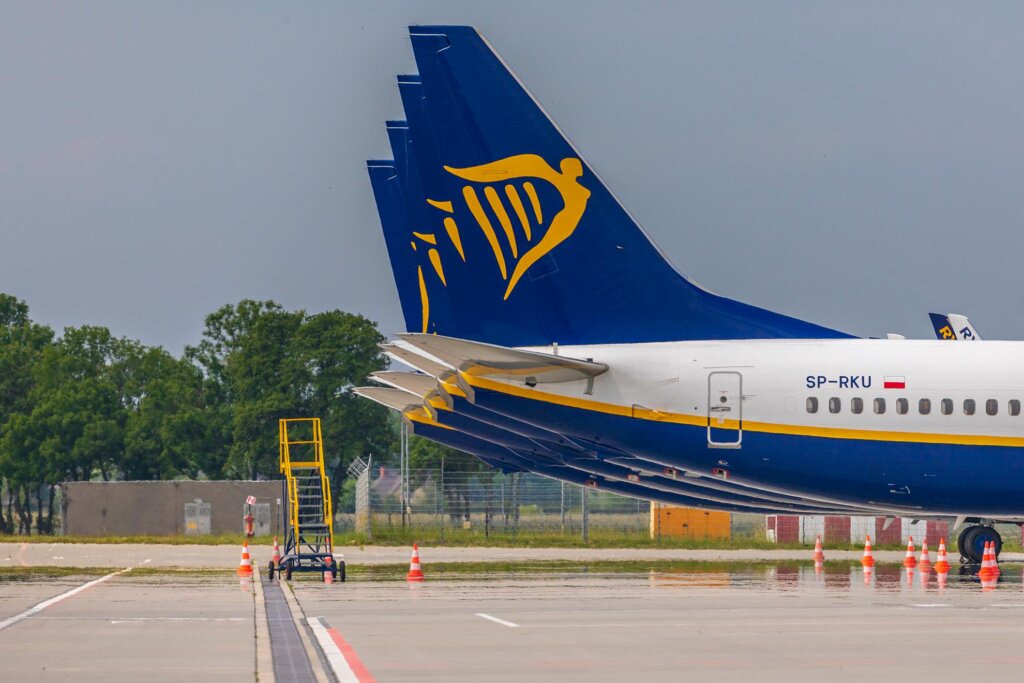
Ryanair, the UK’s No.1 passenger airline, today (Fri, 5 Dec) announced that the first flight of its new Winter 2025 route from Newcastle to Wrocław will take off this weekend. Ryanair will operate 2 flights per week on this exciting new Winter 2025 route, providing customers in the North East with even more choice at Europe’s lowest fares.
Ryanair’s full Winter 2025 schedule is available to book now at ryanair.com.
Ryanair’s Comms Director, Jade Kirwan, said:
“We’re pleased to see the first flight of our new Winter 2025 route from Newcastle to Wrocław take off this weekend (Sat, 6 Dec), carrying lots of cheerful holidaymakers heading away for a well-warranted winter break. This exciting new Winter route will operate twice per week, adding to Ryanair’s already robust UK Winter 2025 schedule, offering even more choice at the lowest fares.
Ryanair’s full UK Winter 2025 schedule is available to book now at ryanair.com.”
Newcastle Airport’s Chief Operating Officer, Richard Knight, said:
“We are excited to see Ryanair’s new Winter route to Wrocław take off for the first time this weekend. The service, along with additional Winter flights to Budapest, Brussels, Gdansk and Malta, provides our passengers with even more choice to enjoy some of Europe’s most popular festive city break destinations and winter sun getaways. Ryanair’s continued investment in Newcastle Airport further strengthens our growing route network and reflects the strong demand for connectivity from the North East to key European destinations.”

Ryanair, the UK’s No.1 passenger airline, today (Fri, 5 Dec) announced that the first flight of its new Winter 2025 route from London Luton to Wrocław took off today. Ryanair will operate 4 flights per week on this exciting new Winter 2025 route, providing its UK customers with even more choice and regular connections at the lowest fares in Europe.
Ryanair’s full Winter 2025 schedule is available to book now at ryanair.com.
Ryanair’s Comms Director, Jade Kirwan, said:
“We’re pleased to see the first flight of our new Winter 2025 route from London Luton to Wrocław take off today (Fri, 5 Dec), carrying lots of cheerful holidaymakers heading away for a well-warranted winter break. This exciting new Winter route will operate 4 times per week, adding to Ryanair’s already robust UK Winter 2025 schedule, offering even more choice at the lowest fares.
Ryanair’s full UK Winter 2025 schedule is available to book now at ryanair.com.”