RYANAIR CALLS ON THE DÁIL TRANSPORT COMMITTEE TO ABOLISH DUBLIN AIRPORT TRAFFIC CAP
25 Mar 2026
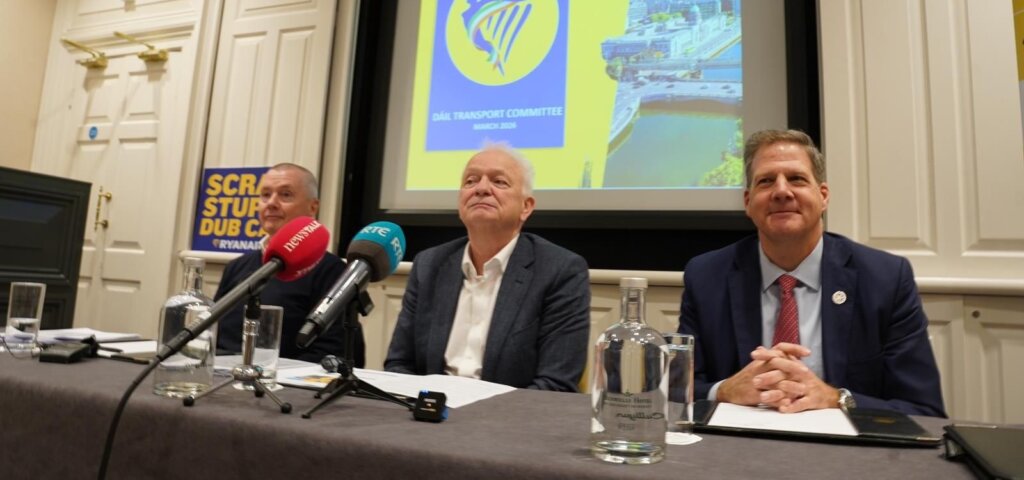
Ryanair, Europe’s No.1 passenger airline, today (Wed 25 Mar) called on the Dáil Committee of Transport to abolish the Fingal CoCo’s unlawful 2007 32m passenger cap at Dublin Airport. The abolition of this cap was raised in the manifestos of most political parties in the 2024 General Election. Both Fianna Fail and Fine Gael won a majority, and published their Govt Program in Jan 2025, promising to abolish the Dublin Airport cap “as soon as possible”. Yet 16 months later, the cap remains as the Govt have failed to act.
In addition to Ryanair, other airlines, IATA, and A4A, all made submissions to the Transport Committee calling on the Govt to deliver on its Jan 2025 Program promise to scrap the cap. Ryanair highlighted that the noise claims of local residents are bogus. Ryanair’s research shows that avg. daily noise over St Margarets, Ballyboughal and Ashbourne is less than 50 decibels, which is defined as “quiet, moderate and generally safe”. Even with an aircraft overhead, noise levels over these localities rise to just 52dB or 53dB. Ryanair believes that “nimbies” who moved into the North Dublin area in 1998 or in 2016 (long after Dublin Airport opened in 1940!), should not be allowed to object to, or delay, national airport infrastructure.
Ryanair calls for Dublin Airport to be removed from Fingal CoCo’s failed planning system. It is absurd that a 32m passenger cap was imposed on Dublin Airport in 2007 over now long outdated road traffic concerns. The growth of air traffic at Dublin Airport should not be affected by outdated road traffic issues limiting air travel on and off the island of Ireland.
As today’s submission to the Transport Committee demonstrated, Dublin and Ireland can enjoy significant additional traffic, tourism and jobs growth, by taking advantage of the 2nd runway, which was opened in 2020. This 2nd runway creates potential traffic growth to between 50m to 60m over the next decade. Dublin Airport is the key gateway on and off the island of Ireland. Ryanair will take delivery of 300 new Boeing aircraft over the next 10 years. These aircraft will come to Europe in any event, so the only question for Dublin and Ireland is how much of the growth does Ireland want, and should Dublin and Ireland lose this traffic and jobs growth to other European States because of the continued failure of Micheál Martin’s Govt to deliver on its Govt Program to scrap the Dublin Airport cap “asap”.
Ryanair’s CEO Michael O’Leary said: “It is time for Micheál Martin to finally deliver on his Govt Program after 16 months of inaction, and scrap the Dublin Airport cap “as soon as possible”. There are no valid reasons to prevent airlines and the Irish economy from benefiting from Dublin’s 2nd runway, which we, the airlines, are paying for. Given avg. daily noise levels of under 50dB, the noise complaints from local residents are bogus, particularly since those people moved nearer to Dublin Airport in 1998 or in 2016. The Airport has been there since 1940.
Dublin and Ireland can enjoy significant routes, traffic, and jobs thanks to Dublin’s 2nd runway. Ryanair has 300 aircraft on order, and can uniquely deliver this growth for Dublin and for Ireland, but only when this illegal cap is abolished, and the DAA offers competitive airport charges. The time for delay and dithering is over. We call on Micheál Martin to deliver on his Govt Program promise to scrap the Dublin Airport cap, and take action urgently before the US Authorities retaliate by blocking Aer Lingus flights landing in New York.”
Chris Sununu, President & CEO of Airlines for America said: “Dublin Airport’s passenger cap is no longer just a planning issue. It is a policy choice that is holding back Ireland’s economy, undermining certainty for airlines and travellers, and putting vital transatlantic connectivity at risk. Airlines for America’s position is clear: the cap should be removed through a durable legislative solution that keeps Dublin open to growth, competition, and international connectivity.”
RYANAIR AND KNOCK AIRPORT CELEBRATE 40 YEARS OF GROWTH
24 Mar 2026
WHO NEEDS SAM MAGUIRE WHEN YOU HAVE RYANAIR??
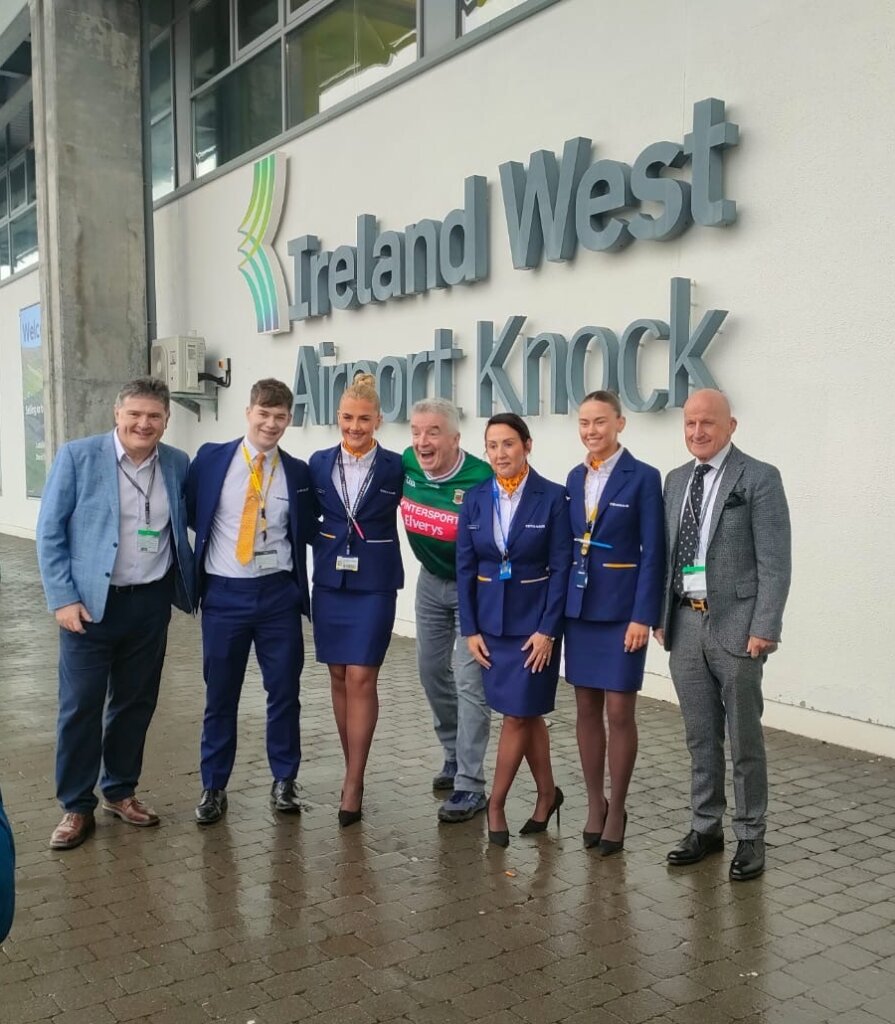
Ryanair, Europe’s No.1 airline, today (Tues, 24 Mar) flew a celebration Boeing 737 into Ireland West Airport Knock Airport to mark 40 years of commercial flights since the airport first opened in 1986. Over that period of the last 40 years, Ryanair – which is Knock’s biggest airline customer – has carried over 12m passengers to/from Knock.
Ireland West Airport Knock Airport continues to be the leading low-fare gateway to/from the West of Ireland, and is one of the fastest growing airports in Europe since the Covid pandemic. In 2026, Knock Airport will welcome over 1m passengers for the first time in its history, up 40% from its pre-Covid 700,000 traffic volumes.
Ryanair continues to invest in and grow at Ireland West Airport Knock Airport. In Summer 2026, Ryanair expects to carry 1m passengers to/from Knock, and will account for some 95% of Knock Airport’s total traffic, which in 2026 will exceed 1m passengers for the first time ever.
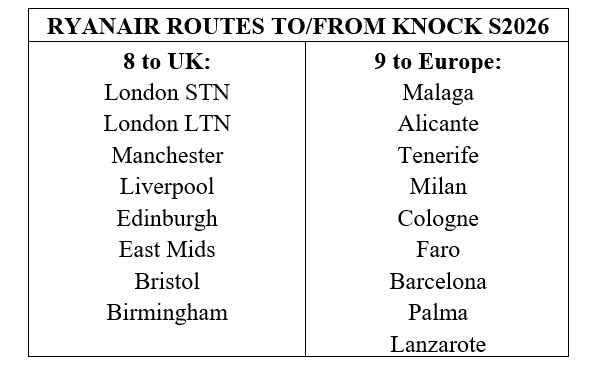
This Summer, Ryanair will operate 17 routes to/from Knock with 8 routes to/from the UK and 9 routes to/from Europe.
Arriving in Knock Airport today (wearing Mayo colours), Ryanair’s CEO, Michael O’Leary, said:
“Having Ryanair in Knock Airport is far better than any Sam Maguire. Mayo may have been cursed on the football fields for the last 50 years, but thanks to Knock Airport and Ryanair, it continues to be the champion for low-fare air access and tourism growth in the West of Ireland. With over 1m passengers in 2026, and 17 routes to the UK & Europe, Ryanair and Knock Airport continue to work closely together to deliver low fare traffic and tourism growth for the West of Ireland.”
Welcoming Michael O’Leary to the airport Managing Director of Ireland West Airport, Joe Gilmore, said:
“We would like to welcome Michael to the airport to mark the 40th anniversary and to recognise the long term business relationship the airport has had with Ryanair since their first service departed the airport in December 1986, this relationship continues to be strong today with the airline serving 17 destinations from the airport, and last year celebrated the wonderful milestone of carrying their 12 millionth passenger through the airport. This summer Ryanair will operate their biggest ever schedule from the airport and we look forward to continuing this strong partnership and to growing our network of routes and services with Ryanair in the future.”
RYANAIR ANNOUNCES £40M EXPANSION AT PRESTWICK MAINTENANCE FACILITY 450 HIGHLY SKILLED ENGINEER & MECHANIC JOBS, INCLUDING 60 APPRENTICESHIP ROLES
20 Mar 2026
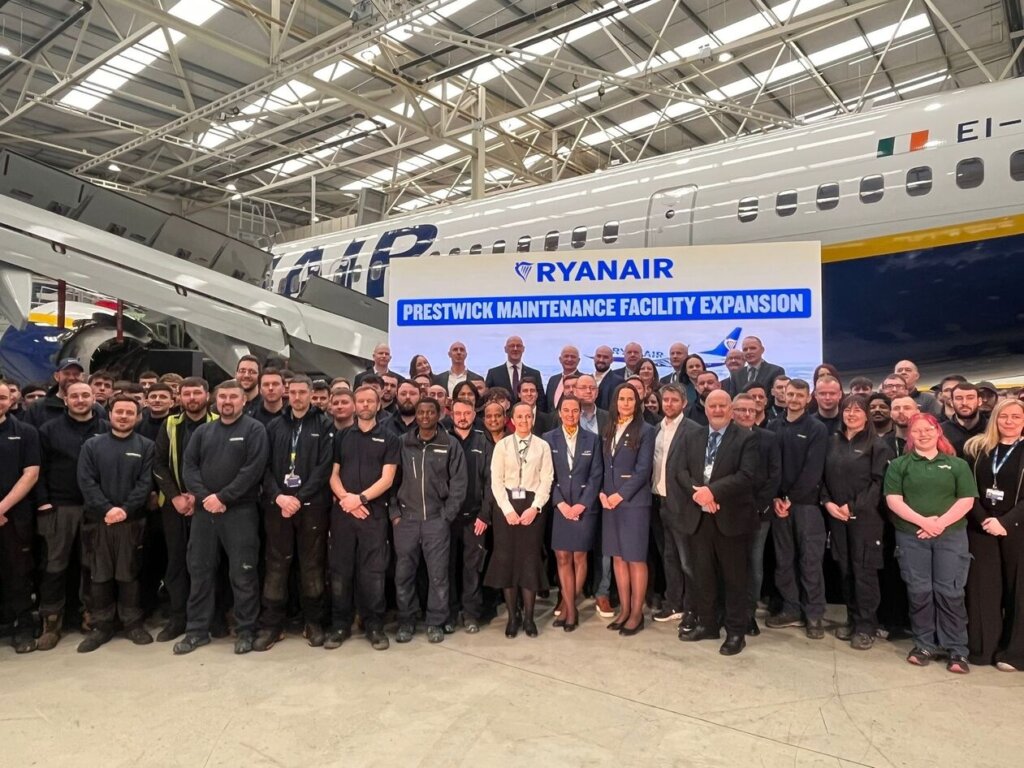
Ryanair, Europe’s No.1 airline, today (Fri, 20 Mar) announced a £40M expansion of its maintenance facility at Prestwick Airport, which will see the construction of a new 11,938 sqm 4-bay heavy maintenance hangar and additional component workshops.
This major development will expand Ryanair’s existing Prestwick operation from 6 to 10 bays, making it Ryanair’s largest heavy maintenance hangar, and further strengthening Prestwick’s position as a key aircraft maintenance and training hub within Ryanair’s network.
Ryanair’s new £40M investment supports over 1,200 highly skilled engineering and mechanic jobs in Ayrshire, providing significant long-term employment and training opportunities for local talent.
This latest project builds on Ryanair’s recent £5M investment in its Prestwick Training Academy, opened in October 2024, which is delivering 500 jobs and industry leading training for engineers, mechanics and support staff to service Ryanair’s growing fleet as it grows to 800 aircraft and 300M passengers by 2034.
Ryanair CEO, Eddie Wilson, said:
“As Europe’s No.1 airline, we are pleased to announce a further £40 million investment at Prestwick Airport, expanding our existing maintenance facility from 6 to 10 bays and creating 450 new highly skilled engineering and mechanic jobs, including 60 apprenticeships.
This new state-of-the-art, 4-bay hangar and component workshops will make Prestwick our largest heavy maintenance facility, and a key part of how we will maintain and support our fleet as we continue to grow to 800 aircraft and 300 million passengers by 2034.
Today’s announcement builds on the £5M investment and 500 jobs delivered with our Prestwick Training Academy, opened in October 2024. Together, these investments underline Ryanair’s long-term commitment to Scotland, to high-quality engineering and mechanic jobs, and to developing the next generation of aviation talent here in Ayrshire.
We thank DFM Forbes and the Scottish Govt, the UK Govt, South Ayrshire Council, Scottish Enterprise, and Prestwick Airport for their support and partnership on this expansion. Their focussed approach in backing this project has been crucial in enabling us to grow Prestwick into a major heavy maintenance and training hub that will deliver skilled careers and economic benefits for many years to come.”
First Minister John Swinney said:
“I am delighted that Scottish Government investment will support the creation of 450 skilled jobs at Prestwick, which will have a major economic impact in Ayrshire and beyond. Ryanair has chosen to expand at Prestwick because of the talent and expertise on the ground and it is testament to the skills of the existing workforce. My government will continue to do everything in our power to support the creation of good jobs and to support economic growth in Scotland.”
The UK Government is providing £4.9 million towards enabling infrastructure for Ryanair’s heavy maintenance hangar – part of its broader £32 million for the Prestwick Aerospace Cluster to position Ayrshire as a leading UK aerospace hub.
UK Government Minister for Scotland Kirsty McNeill said:
“This is a fantastic example of significant public sector funding – including £32 million UK Government Ayrshire Growth Deal money for the Prestwick Aerospace Cluster – unlocking substantial private sector investment, boosting employment and driving economic renewal in Scotland.
“Helping secure Prestwick Airport’s long-term future is a priority for the UK Government and Ryanair’s decision to build its largest heavy maintenance hangar here – creating and supporting 1,200 jobs – is a massive win for Ayrshire and a powerful vote of confidence in our hugely talented local workforce.
“Our collective efforts mean that Ryanair is delivering 450 new high-skilled jobs, including 60 apprenticeships, ensuring that the next generation of Scottish engineers has a world-class career path right on their doorstep. The sky’s the limit for Ayrshire as a global leader in the aerospace sector.”
Scottish Enterprise has approved a £11.6M funding package for the expansion and will deliver a further £1.52M for corresponding infrastructure improvements in collaboration with the Scottish Government.
Scottish Enterprise Chief Executive, Adrian Gillespie, said:
“I’m delighted that Ryanair has chosen Prestwick as the location for the expansion of its maintenance, repair and overhaul operations. This planned investment is a strong endorsement of the people and skills of Ayrshire and a major boost for the site and Scotland’s aerospace sector. It’s a tremendous step forward for the region and a testament to the sector’s reputation and growth potential.
“The expansion will build on Prestwick’s strong track record in aircraft maintenance, increase productivity and create new high-quality jobs. It’s exactly the type of project our mission approach is designed to support.”
Depute Chief Executive for South Ayrshire Council, Kevin Braidwood, said:
“This is a fantastic investment for South Ayrshire and the local area, which will be of significant benefit to the economy.”
Glasgow Prestwick Airport CEO, Ian Forgie, said:
“Glasgow Prestwick Airport is delighted to have played a key role in securing this £40 million development for Ayrshire by providing a long-term land lease for the new hangar, allowing Ryanair to expand the number of aircraft maintenance bays.
“Glasgow Prestwick Airport has enjoyed a strong partnership with Ryanair for more than 30 years and this agreement secures that relationship for the long term and provides a strong platform for passenger growth in the future. We wish the Ryanair team all the success as they start to build the new hangar and the next chapter at Prestwick Airport.”
RYANAIR CONTINUES TO GROW IN SWEDEN WITH RECORD SUMMER ‘26 SCHEDULE
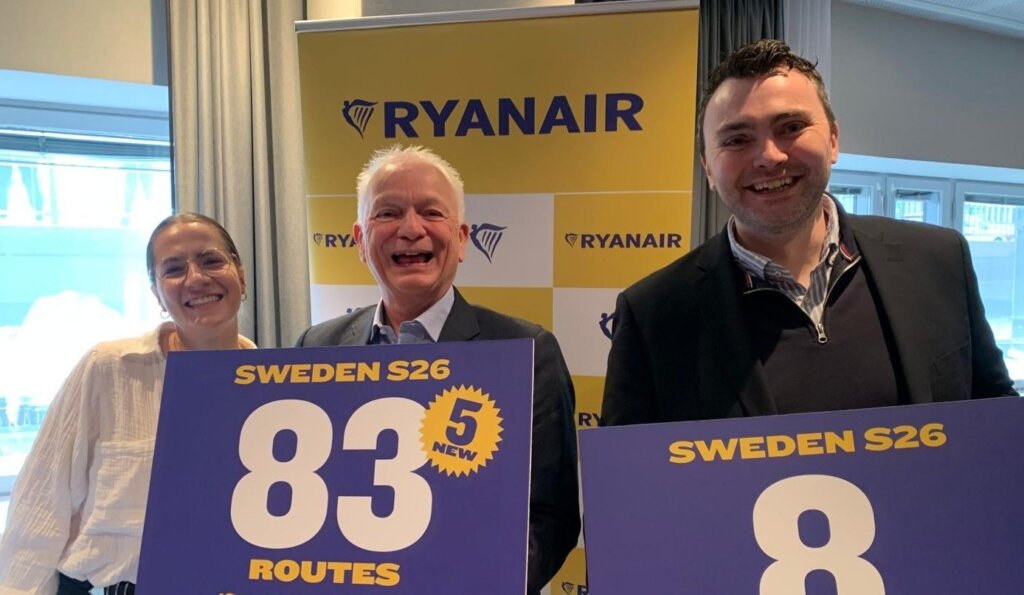
Ryanair, Europe’s No.1 airline, today (Thurs, 19th Mar) announced its record Summer ‘26 schedule for Sweden, delivering over 4.4m passengers p.a., 8 based aircraft and 83 routes (incl. 5 new) across 6 Swedish airports, supporting over 3,500 local jobs and reinforcing Ryanair’s long-term commitment to growth, traffic, and low fares in Sweden. This follows the Govt’s decision to abolish the Aviation Tax from 1 July 2025 – a move which has transformed Sweden’s connectivity, jobs, and tourism.
Ryanair’s Sweden Summer ‘26 schedule will deliver:
8 based aircraft (6 in Arlanda, 2 in Gothenburg) – $800M investment
Since the Swedish Govt. scrapped the Aviation Tax in Jul’25, Ryanair has led Sweden’s traffic growth with stronger expansion than any other airline with a $200M investment, incl. 2 new based aircraft (1 in Arlanda & 1 in Gothenburg), driving tourism, jobs, and regional development. Ryanair alone has delivered 36% of all market growth in Sweden since the tax was abolished, while local carriers such as SAS continue to prioritise Copenhagen and leave Sweden with reduced capacity under a hub model aligned with its future owner, Air France-KLM. SAS is still operating at only 85% of its pre‑Covid capacity in Sweden, Norwegian remains at just 78%, while Ryanair is at 175% of its pre‑Covid capacity, proving that Ryanair is the only airline truly restoring and growing Swedish connectivity.
Ryanair has shown its strong commitment to Sweden’s development and has demonstrated consistent growth when competitive access costs are put in place. However, Swedavia’s rising airport charges (+9% in 2026) and the likely increase in the Govt’s security fee risk undermining Sweden’s competitiveness and reversing the benefits of lower access costs. To fully unlock the potential of the Govt’s drive for competitiveness, airport charges and security fees must be cost-efficient. With the right conditions, Ryanair can double its Swedish traffic to 8m passengers annually, base 6 more aircraft, and create 6,000 additional jobs by 2030 if Sweden maintains competitive access costs.
To celebrate Ryanair’s Summer 2026 schedule in Sweden and this continued growth, Ryanair has launched a 3-day seat sale with fares from just SEK 320.
Ryanair’s CEO Eddie Wilson said:
“Sweden is one of Ryanair’s fastest-growing markets, and this record Summer ’26 schedule – 83 routes (incl. 5 new) and over 4.4m passengers across 6 airports – highlights how strongly we are investing to deliver more choice, lower fares, and enhanced connectivity for Swedish consumers. Our $800m investment in 8 based aircraft supports over 3,500 local jobs, underlining Ryanair’s role in driving tourism and economic growth, making Sweden one of Europe’s best-connected markets with unbeatable low fares.
Ryanair responded immediately to the Govt’s competitiveness drive in abolishing the Aviation Tax by adding aircraft, launching new routes, and driving tourism and economic growth.Meanwhile, local carriers such as SAS are increasingly prioritising Copenhagen and leaving Arlanda with flat capacity as it shifts towards a hub model aligned with its new Air France-KLM owners. In contrast, Ryanair is now doing more than any other airline to support Sweden’s direct connectivity, competition and economic development with consistent growth at both Stockholm and Gothenburg.
However, this progress is now potentially at risk. Swedavia’s continual airport charge rises (+9% in 2026) and the reported increase in the Govt’s security fee, risk undermining Sweden’s competitiveness and reversing the progress achieved through lower access costs, especially at a time when legacy carriers are cutting capacity and failing to deliver growth in Sweden. To fully capitalize on this opportunity and secure Sweden’s competitiveness in attracting aircraft capacity, airport charges and security fees must remain cost competitive. If these conditions are secured, Ryanair is ready to double traffic to 8m passengers annually, basing 6 more aircraft, and creating 6,000 new jobs by 2030. Sweden has a unique opportunity to lead Europe in connectivity and growth, and Ryanair is ready to drive that investment with additional aircraft, routes, tourism opportunities and jobs.
To celebrate Ryanair’s Summer 2026 schedule in Sweden, and this continued growth, Ryanair has launched a 3-day seat sale with fares from just SEK 320, only on the Ryanair app.”
RYANAIR ANUNCIA SU COLABORACIÓN CON VOLA Y FRU
19 Mar 2026
Ryanair, la aerolínea nº1 de Europa, ha anunciado hoy (jueves, 19 de marzo) su último acuerdo de colaboración con Vola y Fru, pertenecientes al Grupo ITH —dos de las plataformas de viajes de más rápido crecimiento de Europa Central y del Este, que operan en Rumanía y Polonia, respectivamente—. Gracias a este acuerdo, los clientes tanto de Vola como de Fru, tendrán acceso a los vuelos de bajo coste y a los servicios complementarios de Ryanair.
Esta es una gran noticia para los clientes de Vola y Fru que deseen acceder a las tarifas bajas de Ryanair, a su inigualable oferta de más de 230 destinos y a su impecable servicio. Al igual que con los acuerdos de «OTA autorizadas» ya existentes de Ryanair, los pasajeros que reserven a través de Vola o Fru podrán hacerlo con total confianza, sabiendo que disfrutarán de una total transparencia en los precios y recibirán información importante sobre el vuelo directamente de Ryanair.
El CMO de Ryanair, Dara Brady, ha declarado:
“Nos complace anunciar nuestro acuerdo de colaboración con Vola y Fru, que se suman a nuestra creciente lista de socios. Gracias a este nuevo acuerdo, los clientes de Vola y Fru podrán reservar vuelos de bajo coste de Ryanair con la garantía de una total transparencia en los precios y acceso directo a su reserva. Estamos deseando trabajar con Vola y Fru y dar la bienvenida a sus clientes a bordo de nuestra red de vuelos de Ryanair, líder en el mercado”.
El CEO y Co-founder de ITH Group, Daniel Truica, ha declarado:
“Vola y Fru se han creado en torno a una idea: eliminar las dificultades del proceso de reserva de viajes. Esta colaboración es el siguiente paso lógico para ofrecer a nuestros clientes la experiencia de reserva de viajes más avanzada. Al conectarnos directamente con la mayor aerolínea de bajo coste de Europa, nuestros clientes ahora tienen acceso a los vuelos que realmente les interesan a través de nuestras plataformas. Eso es precisamente lo que hemos estado persiguiendo”.
RYANAIR INAUGURA SU MAYOR HANGAR DE MANTENIMIENTO EN EL AEROPUERTO DE MADRID – LA INVERSIÓN DE 25 MILLONES DE EUROS REVITALIZA EL ÁREA INDUSTRIAL DE BARAJAS Y CREA 700 EMPLEOS ALTAMENTE CUALIFICADOS
18 Mar 2026
Ryanair, la aerolínea número 1 en España, ha inaugurado hoy (miércoles, 18 de marzo) su nuevo centro de mantenimiento de 25 millones de euros en el Aeropuerto de Madrid-Barajas, el mayor de toda la red de Ryanair. Con capacidad para siete aviones, esta instalación de última generación de 22.000 m², ubicada en el área industrial del aeropuerto, creará 700 empleos altamente cualificados, incluyendo ingenieros, mecánicos y personal de apoyo, reforzando aún más la posición de España y Madrid como hub líder en la aviación europea.
Este nuevo hangar se suma a la actual instalación de mantenimiento de Ryanair en Barajas, elevando así su capacidad total a ocho líneas de mantenimiento de aviones. Además, Ryanair opera también un moderno centro de mantenimiento de aeronaves en Sevilla, con capacidad para 5 aviones, inaugurado en 2019 y ampliado en 2021, que representa una inversión adicional de 30 millones de euros en España.
La instalación de Madrid es ahora una pieza central de la red de Ingeniería de Mantenimiento de Ryanair, con 7 ubicaciones en la UE, y en ella se realizan tanto revisiones rutinarias (A-checks) como trabajos de ingeniería más especializados. Además, Ryanair está trabajando estrechamente con las mejores escuelas de aviación de Madrid para formar y captar ingenieros y mecánicos para este nuevo centro de mantenimiento a través de su Programa Interno de Desarrollo de Ingenieros.
Ryanair, que es la mayor aerolínea de España, es también uno de los mayores inversores extranjeros del país y un actor clave para los sectores turístico e industrial. Con 62 millones de pasajeros al año en España, una flota de 109 aviones repartidos en 11 bases, dos centros de mantenimiento, un centro de formación de tripulaciones recientemente inaugurado y un hub de innovación tecnológica en el centro de Madrid, la inversión total de Ryanair en España asciende a 11.000 millones de euros.
Ryanair es la mayor aerolínea de España, pero su capacidad para seguir invirtiendo y creciendo en el país se está quedando sin margen debido al deterioro de la competitividad en los costes de acceso aeroportuarios, lo que acelerará el traslado de rutas, turismo y empleo a aeropuertos más competitivos y de menor coste en otros lugares de Europa. Mientras que la reciente subida del +6,5 % de Aena ya tuvo un impacto significativo en los recortes de tráfico en los aeropuertos regionales españoles, la última propuesta de incrementar las tarifas un +21 % adicional (antes de la inflación) en los próximos cinco años, socavará la competitividad y el crecimiento de toda la red de aeropuertos de Aena. Lamentablemente, este programa de subidas convertirá a España en un destino turístico de alto coste, cerrado al crecimiento económico y a la creación de empleo. Esta tendencia se ha intensificado aún más este verano, con un crecimiento de Ryanair de apenas un 0,5 %, el más bajo de los últimos años. España necesita aeropuertos eficientes, rentables y con precios competitivos para atraer inversión de las aerolíneas que, a su vez, impulse el crecimiento económico. Si España quiere seguir aumentando la inversión aérea, el tráfico, el turismo y el empleo, el Gobierno debe actuar para abrir la capacidad vacía ya existente en los aeropuertos y aplicar una política de precios competitiva que incentive a todas las aerolíneas a crecer con tasas más bajas. El Gobierno también debe garantizar que las ampliaciones de los grandes aeropuertos sean competitivas y no instalaciones sobredimensionadas o innecesariamente costosas.
La inauguración de hoy contó con la asistencia de José Luis Martínez-Almeida, alcalde de Madrid, así como de autoridades locales y representantes del sector de la aviación en España.
Eddie Wilson, CEO de Ryanair, ha declarado:
“Nos complace anunciar una nueva e importante inversión de Ryanair en España. Hoy inauguramos en Madrid nuestro nuevo hangar de mantenimiento de última generación, con 22.000 m² y siete bahías, el mayor de toda la red de Ryanair, que representa una inversión de 25 millones de euros y la creación de 700 empleos altamente cualificados y bien remunerados para ingenieros y mecánicos, respaldados por nuestro programa líder de Desarrollo de Ingenieros. Esta nueva instalación desempeñará un papel crucial en el apoyo a las operaciones de Ryanair a medida que avanzamos hacia una flota de 800 aviones y 300 millones de pasajeros para 2034.
Ryanair no solo es la mayor aerolínea de España, sino también uno de los mayores inversores extranjeros del país, con 109 aeronaves repartidas en 11 bases, dos centros de mantenimiento (Sevilla y Madrid), un centro de formación de tripulaciones de última generación y, además, un hub de innovación tecnológica líder en el sector en el centro de Madrid, lo que suma una inversión total de 11.000 millones de euros. Nuestra operación genera más de 10.000 empleos directos en Ryanair y sostiene otros 400.000 puestos de trabajo, aportando más de 28.000 millones de euros a la economía española (el 2 % del PIB). Sin embargo, nuestra capacidad para seguir invirtiendo y creciendo en España prácticamente ha tocado techo debido al deterioro de la competitividad del país, una situación que además no deja de empeorar. Los aeropuertos regionales, con un enorme potencial de crecimiento, se están viendo frenados por unas tasas excesivas, mientras que grandes aeropuertos como Madrid, Barcelona, Málaga y Alicante van a ampliarse ahora con un coste desorbitado para justificar la subida del +21 % en las tarifas de Aena, más la inflación, de aquí a 2031, a pesar de que el sector prevé un crecimiento del tráfico suficiente para absorber estas inversiones innecesarias sin necesidad de elevar las tasas aeroportuarias. Esta tendencia se ha acelerado recientemente, y este verano Ryanair crecerá en España a su nivel más bajo, apenas un 0,5%, frente al 11 % de crecimiento en Marruecos y el 9 % en Italia.
España está dejando pasar el factor clave que tantos gobiernos y aeropuertos de toda Europa ya han reconocido, que el rápido crecimiento del tráfico, del turismo y del empleo proviene de instalaciones eficientes, de bajo coste y con aeropuertos competitivos, no de infraestructuras sobredimensionadas donde los precios no dejan de subir. Si el Gobierno español quiere revertir esta tendencia y seguir impulsando la inversión de las aerolíneas, el tráfico, el turismo y el empleo en España, debe cambiar su política y adoptar un sistema de precios aeroportuarios competitivo en costes, que permita aprovechar la capacidad disponible ya existente en los aeropuertos, algo en lo que Aena ha fracasado con su estrategia tarifaria actual”.
RYANAIR OPENS ITS LARGEST MAINTENANCE HANGAR AT MADRID AIRPORT – €25 MILLION INVESTMENT REVITALISES BARAJAS’ INDUSTRIAL AREA & CREATES 700 HIGH-SKILL JOBS
18 Mar 2026
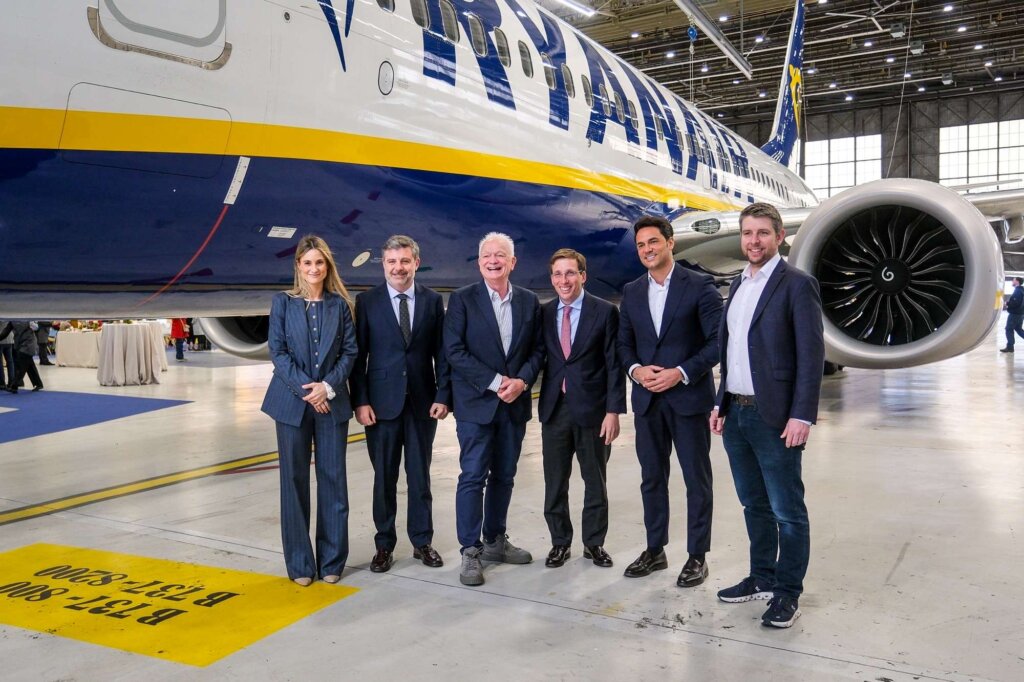
Ryanair, Spain’s No.1 airline, today (Wed, 18 Mar) inaugurated its new €25 million maintenance centre at Madrid Barajas Airport – the largest in the Ryanair network. With capacity for 7 aircraft, this 22,000 m² state-of-the-art facility, located in the airport’s industrial area, will create 700 high-skill jobs, including engineers, mechanics, and support roles, further strengthening Spain and Madrid’s position as a leading hub in European aviation.
This new hangar adds to Ryanair’s existing maintenance facility in Barajas, bringing its total capacity to 8 aircraft lines of maintenance. In addition, Ryanair also operates a modern 5-bay aircraft maintenance centre in Seville, opened in 2019, which was extended in 2021, and represents a further €30 million investment in Spain.
The Madrid facility is now a central part of Ryanair’s Maintenance Engineering network with 7 EU locations, with Madrid performing both routine A-checks along with more specialised engineering work. Ryanair is also working closely with Madrid’s best aviation schools to train and recruit engineers and mechanics for this new maintenance centre under its in-house Engineer Development Programme.
Ryanair, which is Spain’s largest airline, is also one of Spain’s largest foreign investors, and a key contributor to the country’s tourism and industrial sectors. With 62 million passengers p.a in Spain, a fleet of 109 aircraft across 11 bases, two maintenance centres, a recently commissioned crew training facility, along with an IT innovation hub in central Madrid, which in total brings Ryanair’s investment in Spain to €11bn.
Ryanair is Spain’s largest airline but its ability to continue investing and growing in Spain is running out of road due to deteriorating competitiveness on airport access costs that will accelerate the migration of routes, tourism and jobs to more competitive, lower cost airports elsewhere in Europe. While Aena’s recent +6.5% increase had a significant impact on traffic cuts at Spain’s regional airports, the latest proposal to increase charges by +21% (before inflation) over the next five years will undermine competitiveness and growth across the entire Aena network of Airports. Sadly, this programme of increases will establish Spain as a high-cost tourism destination closed to economic growth and job creation. This trend has accelerated with Ryanair growing this summer at its lowest level in many years of just 0.5%. Spain needs efficient cost-effective airports with competitive pricing to attract airline investment that in turn, boosts economic growth. If Spain wants to continue to grow airline investment, traffic, tourism and jobs, the Govt must take action to open up existing empty capacity at airports along with competitive pricing, which will incentivise all airlines to grow with lower charges. The Govt must also ensure that extensions to larger airports are competitive and not gold-plated facilities.
Today’s inauguration was attended by Jose Luis Martinez-Almedia, Mayor of Madrid, as well as local authorities and representatives from Spain’s aviation sector.
Ryanair DAC CEO, Eddie Wilson, said:
“We are pleased to announce another major Ryanair investment in Spain; Today we inaugurate our new 22,000 sqm state-of-the-art 7-bay maintenance hangar in Madrid – the largest across the Ryanair network – representing a €25 million investment and creating 700 high-skill, high-pay engineer and mechanic jobs, supported by our industry-leading Engineer Development Programme. This new facility will play a crucial role in supporting Ryanair’s operations as we grow to 800 aircraft and 300 million passengers by 2034.
Ryanair is not only Spain’s largest airline, but one of Spain’s largest foreign investors, with 109 aircraft based across 11 bases, two maintenance centres (Seville and Madrid), a state-of-the-art crew training centre, along with an industry-leading IT innovation hub in central Madrid, amounting to a total investment of €11bn. Our operation provides over 10,000 direct Ryanair jobs and supports a further 400,000 jobs, contributing over €28bn to the Spanish economy (2% GDP). However, our ability to continue investing and growing in Spain has almost topped out due to Spain’s deteriorating competitiveness, which is progressively getting worse. Regional airports with huge potential to grow are being held back by excessive charges, and major airports like Madrid, Barcelona, Malaga and Alicante, are now going to be extended at exorbitant cost to justify Aena’s +21% charge increase plus inflation by 2031, despite the sector projecting sufficient traffic growth to absorb these wasteful investments without raising airport fees. This trend has recently accelerated with Ryanair set to grow this summer at its lowest level of just 0.5% in Spain, when Ryanair is growing by 11% in Morocco and 9% in Italy.
Spain is missing the key factor that so many Govts and airports across Europe have recognised, that rapid traffic, tourism and jobs growth come from low cost, efficient facilities with competitive airports, not gold-plated facilities where prices continuously rise. If the Spanish Govt wish to reverse this trend and continue to grow airline investment, traffic, tourism and jobs for Spain, they must change policy to have a cost competive airport pricing system to open up existing spare capacity at airports where Aena has failed with its existing pricing strategy.”