
Ryanair Holdings plc (Mon, 4 Nov) released Oct 2024 traffic stats as follows:


Ryanair Holdings plc (Mon, 4 Nov) released Oct 2024 traffic stats as follows:


REGRETS THAT AIRLINES HAD TO RESORT TO COURTS DUE TO EAMON RYAN’S FAILURE TO ACT
Ryanair today (Mon, 4 Nov) welcomed the High Court ruling which stays the Dublin Airport cap and prevents the IAA imposing slot restrictions for Summer 2025 until the EU Courts have ruled on the matter. Ryanair welcomes this sensible ruling as it believes that the Dublin Airport Cap is in breach of EU legislation on Freedom of Movement. Ryanair remains confident that EU law will triumph 2007 Fingal planning restriction and will allow airlines to grow traffic and tourism with the benefit of Dublin’s second runway.
Ryanair’s CEO Michael O’Leary said:
“It is deeply regrettable that the airlines had to take legal action to stay the idiotic cap at Dublin Airport solely because Transport Minister, Eamon Ryan, wouldn’t do his job and issue a letter to the IAA. The Dublin Airport cap is in breach of EU law and any competent Transport Minister (not to mention Tourism Minister, Catherine Martin) would have acted to scrap this outdated and damaging cap.
Today’s High Court ruling clears the way for this matter to be referred to the European Courts where Ryanair is confident that this absurd road traffic restriction from 2007 will be removed, which will enable airlines like Ryanair to continue to grow traffic, tourism, and jobs in Ireland, where two Green Ministers (Eamon Ryan and Catherine Martin) have failed to act for the last 5 years.
We hope the forthcoming Election will remove the deadhanded Green Party incompetence from Irish tourism and aviation so that Ryanair can return to growing at Dublin Airport instead of sending growth to Belfast, Italy and Poland.”

Ryanair Holdings plc today (4 Nov) reported a H1 after tax profit of €1.79bn, which is 18% lower than the prior-year H1 PAT of €2.18bn, as strong traffic growth (up 9%) to 115m customers was offset by lower air fares, which declined 7% in the second quarter.

H1 highlights include:
H1 FY25 BUSINESS REVIEW
Ryanair Group CEO Michael O’Leary, said:
Revenue & Costs:
“Total H1 revenue rose 1% to €8.69bn. Scheduled revenue fell 2% to €5.95bn. The move of half Easter into PYQ4 and out of Q1, consumer spending pressure (driven by higher-for-longer interest rates and inflation reduction measures) and a drop in OTA bookings ahead of S.24 necessitated more price stimulation than originally expected (with Q1 fares down 15% & Q2 down 7%) as Ryanair maintained its ‘load active/yield passive’ pricing policy. Many customers are switching to Ryanair for our lower air fares. As a result, we are capturing record share gains across most markets. Traffic, despite repeated Boeing delivery delays, grew 9% to 115m while ancillary revenues were resilient, rising 10% to €2.74bn. Operating costs performed well, rising 8% (lagging behind 9% traffic growth) to €6.68bn, as fuel hedge savings offset higher staff and other costs due, in part, to Boeing delivery delays. While modest delay compensation was received in H1 (mainly maintenance credits) this does not offset the substantial impact of a 5m+ passenger shortfall in FY25 due to these delivery delays.
H2 FY25 fuel is 85% hedged at $79bbl, derisking the Group during the recent period of significant fuel price volatility. FY26 hedge cover has also been increased to 75% at $77bbl, securing modest year-on-year price savings.
Balance Sheet, Liquidity & Shareholder Returns:
Ryanair’s balance sheet is one of the strongest in the industry with a BBB+ credit rating (both S&P and Fitch). Gross cash was over €3.3bn and net cash was €0.6bn at 30 Sept., despite €0.9bn capex, €0.9bn share buybacks and a €0.2bn final dividend in H1. Our owned B737 fleet (580 aircraft) is fully unencumbered, which widens Ryanair’s cost advantage over competitor airlines, many of whom are exposed long term to expensive finance and lease costs.
The Group restarted share buybacks in May, with €700m completed in Aug. We expect the €800m follow-on programme to be completed by mid 2025. When complete, Ryanair will have returned almost €9bn (incl. dividends) to shareholders since 2008, with approx. 36% of the issued share capital repurchased. A final dividend of €0.178 per share was paid in Sept. and today the Board (in line with Ryanair’s dividend policy) has declared an interim dividend of €0.223 per share, to be paid in late Feb. 2025.
FLEET & GROWTH
Ryanair had 172x B737 Gamechangers in our fleet at 31 Oct. We now expect our remaining 9 Q3 deliveries to slip into Q4 due to recent Boeing strikes. While we continue to work with Boeing leadership to accelerate aircraft deliveries ahead of peak S.25, the risk of further delivery delays remains high. We believe it is therefore sensible to moderate Ryanair’s FY26 traffic growth target to 210m passengers (previously 215m) to reflect these delivery delays, as we wish to avoid being over-scheduled, over-crewed and over costed as we were in S.24.
During S.24 we operated our largest ever schedule, carrying a new record of 20.5m passengers in one calendar month (Aug.). Our S.24 network included 5 new bases and over 200 new routes. As we move into W.24 and plan for S.25, we’ll continue to reallocate capacity, and growth, to regions and airports who are investing in growth by cutting/scrapping aviation taxes (as Sweden, Hungary and various Italian regions have) or who are incentivising traffic growth. To date, over 90% of S.25 capacity is on sale, incl. 165 new routes.
We expect European short-haul capacity to remain constrained for some years as many of Europe’s Airbus operators work through the Pratt & Whitney engine repairs, both major OEMs struggle with delivery backlogs, and airline consolidation continues, including Lufthansa’s takeover of ITA (Italy) and the impending sale of TAP (Portugal). These capacity constraints, combined with our widening cost advantage, strong balance sheet, low-cost aircraft orders and industry leading operational resilience will, we believe, facilitate Ryanair’s low-fare profitable growth to 300m passengers over the next decade.
ESG
Ryanair is Europe’s No. 1 rated ESG airline with industry leading ratings from Sustainalytics, MSCI (A) and CDP (A-). Our new aircraft, increasing use of winglets and SAF positions Ryanair as one of the EU’s most efficient major airlines. We welcome SBTi’s (Science Based Targets initiative) recent validation of the Ryanair Groups environmental targets (to reduce CO2 per pax/km to c.50grams by 2031 – a 27% reduction), making us the first major airline with a target validated to the latest SBTi guidelines. During H1 we took delivery of 24x B737-8200 “Gamechangers” (4% more seats, 16% less fuel & CO2) and this winter we’ll extend the retro-fit of winglets to our B737NG fleet (target 409 by 2026), reducing fuel burn by 1.5% and noise by 6%. Next summer, Ryanair plans to migrate the last 25% of customers who don’t already check-in via the Ryanair App to paperless boarding. Apart from removing 300 tonnes of paper annually, this initiative ensures that all customers have access to Day of Travel updates, live flight information, the convenience of Order to Seat for onboard purchases and the many other features contained in the Ryanair App (the ideal travel companion).
During 2024 European airlines suffered a summer of record ATC delays due to daily ATC staff shortages and repeated equipment failures, which caused repeated flight delays and cancellations (especially to the first wave morning departures). We renew our call on the new EU Commission to urgently deliver long delayed reform of Europe’s hopelessly inefficient ATC service. This can be achieved by properly staffing Europe’s ATC providers, especially for the morning/first wave departures and protecting overflights (during national strikes) which would deliver dramatic punctuality and environmental benefits for EU air travel and our citizens.
EU Airline Ownership & Control:
In Sept. the Board confirmed that over 49% of Ryanair’s issued share capital is held by EU nationals and, based on current trends, they expect this figure to exceed 50% within the next 6-12 months. In anticipation of this threshold being reached, the Board deemed it appropriate to review the potential variation of (1) the purchase prohibition on non-EU nationals acquiring Ryanair ordinary shares (in place since 2002) or (2) the voting restrictions (in effect since Jan. 2021, following Brexit) in a manner that best ensures compliance with EU Reg. 1008/2008. As part of this review, an engagement process with shareholders and regulators is ongoing. Current restrictions on share purchases and voting by non-EU nationals will remain in place during the review, and there can be no certainty as to the duration of this review or that any variation in approach will result from the review.
OUTLOOK
We continue to target between 198m and 200m passengers in FY25 (+8%), subject to no worsening of current Boeing delivery delays. Unit costs performed well in H1 as the cost gap between Ryanair and EU competitor airlines continues to widen. We expect full-year unit costs to be broadly flat, as our fuel hedge savings, strong interest income and some modest aircraft delay compensation will largely offset ex-fuel cost inflation (particularly crew pay & productivity increases, higher handling & ATC fees and the cost inefficiency of repeated B737 delivery delays). Forward bookings suggest that Q3 demand is strong and the decline in pricing appears to be moderating. We remain cautious on Q3’s ave. fare outlook, expecting them to be modestly lower than Q3 prior year (subject to close-in Christmas and New Year bookings). As is normal at this time of year, we have almost zero Q4 visibility, although this quarter will not benefit from last year’s early Easter, which will make the prior year Q4 comps challenging. It therefore remains too early to provide meaningful FY25 PAT guidance. The final FY25 outcome will be subject to avoiding adverse developments during the remaining 5 months of FY25, especially given the risk of conflicts in Ukraine and the Middle East, repeated ATC short-staffing and capacity restrictions, and/or further Boeing delivery delays.”
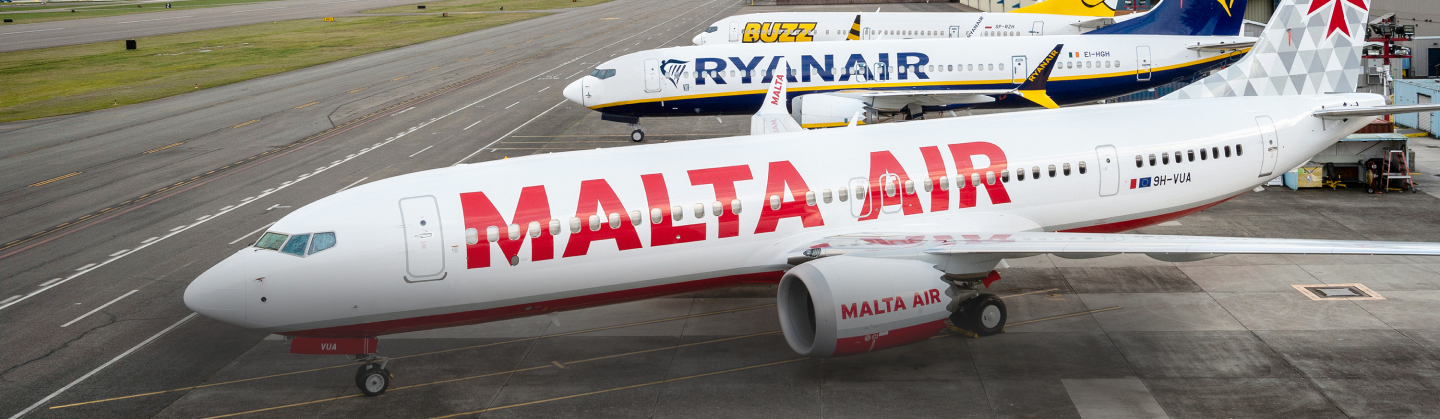
Ryanair Holdings plc, Europe’s largest airline group, is the parent company of Buzz, Lauda, Malta Air, Ryanair & Ryanair UK. Carrying c.200m guests p.a. on approx. 3,600 daily flights from 95 bases, the Group connects 234 airports in 37 countries on a fleet of over 600 aircraft, and almost 340 new Boeing 737s on order, which will enable the Ryanair Group to grow traffic to 300m p.a. by FY34. Ryanair has a team of over 27,000 highly skilled aviation professionals delivering Europe’s No.1 operational performance, and an industry leading 39-year safety record. Ryanair is one of the most efficient major EU airlines. With a young fleet and high load factors, Ryanair targets 50grams of CO₂ per pax/km by 2031 (a 27% reduction).
Certain of the information included in this release is forward looking and is subject to important risks and uncertainties that could cause actual results to differ materially and that could impact the price of Ryanair’s securities. It is not reasonably possible to itemise all of the many factors and specific events that could affect the outlook and results of an airline operating in the European economy and the price of its securities. Among the factors that are subject to change and could significantly impact Ryanair’s expected results and the price of its securities are the airline pricing environment, fuel costs, competition from new and existing carriers, market prices for the replacement of aircraft, costs associated with environmental, safety and security measures, actions of the Irish, U.K., European Union (“EU”) and other governments and their respective regulatory agencies, post-Brexit uncertainties, any change in the restrictions on the ownership of Ryanair’s ordinary shares and the voting rights of its shareholders and ADR holders, including as a result of regulatory changes or the actions of Ryanair itself, weather related disruptions, ATC strikes and staffing related disruptions, delays in the delivery of contracted aircraft, fluctuations in currency exchange rates and interest rates, airport access and charges, labour relations, the economic environment of the airline industry, the general economic environment in Ireland, the U.K. and Continental Europe, the general willingness of passengers to travel and other economics, social and political factors, global pandemics such as Covid-19 and unforeseen security events.

TAXING FLIGHTS FOR ORDINARY FAMILIES WILL DAMAGE UK TOURISM, JOBS AND GROWTH
Ryanair the UK’s number 1 Airline today (Fri 1 Nov) condemned the new Starmer Govt budget decision to increase APD on short-haul low fare air travel by £2 per passenger which will further burden ordinary UK families travelling abroad on Holidays or to visit friends and families. A family of 4 flying to Spain on a low cost holiday next year will pay £60 in air travel taxes to a Govt whose Minister receives £1000’s in free clothes and concert tickets. This anti-growth tax hike will damage UK tourism, jobs and economic growth, especially the UK Regions, with Regional Airports being particularly damaged by this tax on ordinary families.
Higher air travel taxes means higher UK access costs, which makes the UK a less competitive destination for tourism and airline investment. Less tourism means fewer flights, higher fares, and job losses which will be especially damaging for UK Regional Airports and for UK domestic flights (which pay APD on the double).
If the new Labour Govt are serious about their claims to deliver “growth” then they should start by scrapping APD and lowering air access costs to the UK which will stimulate Tourism, giving rise to rapid growth in visitor numbers, regional tourism and jobs.
Ryanair’s Michael O’Leary said:
“As an Island economy on the periphery of Europe, it is vital that the UK lowers air access costs so that low fare Airlines can grow tourism, traffic, visitor numbers and jobs especially in the regions. Instead, Chancellor Rachel Reeves this week has damaged the UK’s growth prospects and made air travel much more expensive for UK families travelling abroad on holidays, or to visit friends and family.
This Labour Govt promised to deliver growth but instead their first budget has damaged growth, damaged tourism, and damaged air travel to/from the UK. At a time when Ireland, Hungary, Sweden and many regions in Italy have abolished air travel taxes, Chancellor Rachel Reeves idiotic decision to further raise the UK’s already high air travel taxes will deliver cuts, not growth.
This week’s anti-growth air tax increase shows that Chancellor Rachel Reeves has no clue how to deliver growth in the UK economy. This short-sighted tax grab will make air travel much more expensive for ordinary UK families going on holidays abroad and will make the UK a less competitive destination compared to Ireland, Sweden, Hungary and Italy where these Govt’s are abolishing travel taxes to stimulate traffic, tourism, and jobs growth in their economies. Ryanair will now review its UK schedules and expects to cut capacity to/from UK airports by up to 10% in 2025. This will reduce air travel to/from the UK by up to 5m passengers as the Labour Govt’s budget delivers higher taxes and tourism declines not growth.”

£5M INVESTMENT & 500 JOBS FOR ENGINEERS AND MECHANICS
Ryanair, Europe’s no.1 airline, today (Thurs, 31 Oct) celebrated the opening of an engineering Training Academy at Prestwick Airport, delivering an investment of £5M and creating 500 highly skilled jobs in the locality, including licensed engineers, mechanics and support staff.
This investment sees the addition of state-of-the-art classrooms and workshops and installation of a training aircraft on site, for the delivery of highly qualified engineers and mechanics to support the maintenance of Ryanair’s fleet as it grows to 800 aircraft by 2034.
This investment underpins Ryanair’s commitment to the UK and Scotland as it further drives connectivity, inbound tourism & employment.
CEO of Ryanair, Eddie Wilson, said:
“As the number 1 airline in Europe, we are delighted to announce an investment of £5 million in a Training Academy at Prestwick Airport creating 500 new engineer and mechanic positions at Prestwick.
The upgrade includes new classrooms, workshops, and training facilities, including a training aircraft on site and we look forward to investing in Ayrshire with state-of-the-art training facilities to support our 6 bay Heavy Maintenance Facility.”

RYANAIR’S INDUSTRY-LEADING ROUTE NETWORK, FREQUENCIES, AND FARES NOW AVAILABLE FOR CORPORATE TRAVELLERS THROUGH CONCUR TRAVEL
Ryanair, Europe’s No.1 airline, today (29 Oct) announced that Ryanair flights are now available for corporate travellers to book via new Concur Travel through a direct connection. This means direct access to Ryanair’s industry leading low fares and unrivalled network of key city connections across Europe (240 airports) with regular morning and evening flights, giving the business travel world more choice at the lowest fares in Europe.
Corporate customers who book Ryanair flights directly through the new Concur Travel will also benefit from significant efficiencies and the convenience of their booking details being fed into SAP Concur solutions, reducing any unnecessary admin. They also won’t have to complete Ryanair’s Customer Verification making their business travel experience even more seamless.
Ryanair CMO, Dara Brady, said:
“This is great news for the business travel world as corporate travellers will now be able to access Ryanair’s low fares and industry leading route network of 3,600 daily flights across 240 airports, conveniently through Concur Travel, giving them more choice and flexibility for their business trips. Our low fares and high frequency schedules cater perfectly for business travel, saving money and time for businesses.”
Paul Dear, Regional Vice President – Supplier Services EMEA, SAP Concur commented:
“Everything we’ve built with Ryanair aims to connect them to the wider business travel industry in the most seamless, effective, and productive way. Ryanair wanted to bring its travel options to the corporate world and came to us as they see us as a trustworthy partner thanks to our transparent customer paths.”

Ryanair, Europe’s No.1 airline, today (23rd Oct) launched its Winter 2024 schedule for Copenhagen, with 29 routes including 4 exciting new routes to Barcelona, Bristol, Poznań and Sofia, giving Danish citizens/visitors more choice at the lowest fares in Europe. Why not meander through Las Ramblas in Barcelona, bask in the culture of Bristol’s industrial heritage, stroll through Poznań’s Old Market Square and by the scenic Malta Lake or take in Sofia’s many churches representing different eras of its rich history?
While Ryanair continues to invest, grow traffic & tourism to Copenhagen, and provide much-needed competition to high-fare carriers, like SAS & Norwegian, this growth is in jeopardy of the Govt’s ridiculous proposal to introduce an Aviation Tax of DKK 50 per departing passenger from Jan 2025, which they are dressing up as a fake ‘eco tax’.
Denmark is one of the few European States that has yet to recover its pre-Covid traffic at just 95% of its 2019 levels. If Denmark introduces this Aviation Tax, it would make Danish air travel even less competitive than other EU States, such as Sweden, where the Govt determined that aviation taxes do nothing to promote sustainable aviation but only damage economic growth, tourism, and employment, whilst also limiting low fare connectivity. As a result, the Swedish Govt made the pragmatic and forward-thinking decision to abolish the Aviation Tax, which Ryanair responded to by adding 2 extra aircraft ($200m investment), 10 new routes, and 60 new jobs for Sweden’s Summer 2025 schedule.
Ryanair calls on the Danish Govt to follow Sweden’s example and scrap its plans to introduce an Aviation Tax, and instead make Denmark more competitive and attractive for airlines, like Ryanair, to invest, grow and deliver more low fare routes, which Denmark needs if it is to fully recover its pre-Covid traffic, as most other EU countries already have.
Ryanair’s Dara Brady said:
“Despite Ryanair’s significant post-Covid growth in Denmark (+35%), including 4 new Copenhagen routes (Barcelona, Bristol, Poznań & Sofia) for Winter 2024, Denmark is one of the few European countries (like Germany) that has failed to recover its pre-Covid traffic due to its high access costs and high airport charges. Despite this, the Govt is absurdly proposing to introduce a new Aviation Tax from Jan 2025, which would make Denmark even less competitive than other EU States, who are abolishing taxes and lowering airport costs to stimulate traffic growth.
Ryanair is the only major airline growing traffic in Europe, and cost is the main factor we consider when deciding where to allocate our new aircraft and growth. Ryanair calls on the Danish Govt to follow Sweden’s example, scrap its plans to introduce an Aviation Tax, and instead promote policies to lower costs to incentivise growth and competition to high fare national flag carrier, SAS.”