RYANAIR LANÇA CALENDÁRIO RECORD S26 DE/ PARA PORTUGAL
28 Jan 2026
1 NOVA AERONAVE E 4 NOVAS ROTAS PARA FARO E PORTO, CRESCIMENTO EM LISBOA BLOQUEADO PELAS TAXAS ELEVADAS DA ANA E FALTA DE AUMENTO DE CAPACIDADE
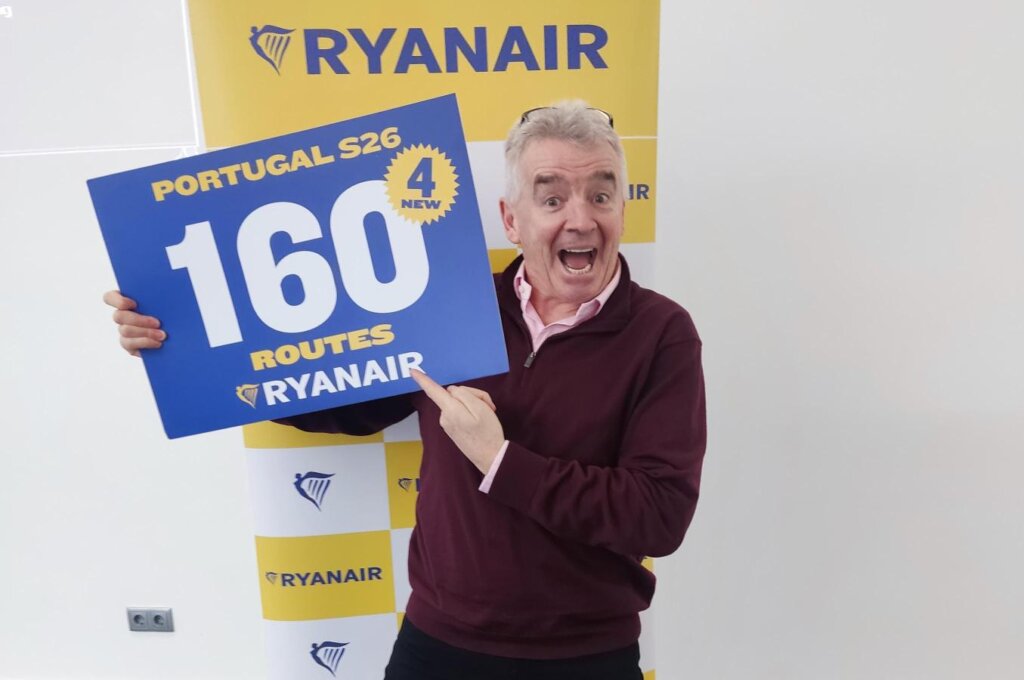
A Ryanair, a maior companhia aérea da Europa, anunciou hoje (quarta-feira, 28 de janeiro) o seu calendário recorde de verão 2026 (S2026) para Portugal, com 160 rotas, incluindo 4 novas rotas: 1 a partir de Faro (Varsóvia) e 3 a partir do Porto (Gotemburgo, Rabat e Varsóvia), bem como frequências adicionais em mais de 30 rotas existentes a partir de aeroportos regionais. Para apoiar este crescimento, a Ryanair irá basear 1 nova aeronave em Faro, representando um investimento adicional de 100 milhões de dólares em Portugal regional.
Infelizmente, mais uma vez, Lisboa não registará qualquer crescimento no verão de 2026 devido às taxas elevadas da ANA e à recusa do aeroporto em regime de monopólio em aumentar a capacidade no Aeroporto da Portela, o que prejudica o tráfego, o turismo e a criação de emprego em Lisboa. As elevadas taxas da ANA estão também a prejudicar a competitividade das regiões insulares de Portugal, incluindo os Açores, onde a Ryanair foi forçada a encerrar todos os voos a partir de março de 2026, devido às altas taxas aeroportuárias da ANA e à recusa do Governo em reduzir os elevados custos de acesso em Portugal, numa altura em que países concorrentes da UE, como a Suécia, Hungria, Albânia, Eslováquia e Itália, estão a abolir taxas de viagem e a reduzir taxas aeroportuárias para promover o crescimento.
A Ryanair continua a aumentar o tráfego e o turismo em Portugal, transportando mais de 14 milhões de passageiros em 2026 (+4%), mas poderia ter alcançado um crescimento muito maior — duplicando o tráfego para 28 milhões de passageiros por ano, com 16 novas aeronaves (investimento de 1,6 mil milhões de dólares) e 500 novos postos de trabalho até 2030 — caso o Governo tomasse medidas para reduzir as taxas muito elevadas da ANA e aumentar a capacidade na Portela.
O CEO da Ryanair, Michael O’Leary, afirmou:
“A Ryanair continua a crescer em Portugal com 160 rotas no verão de 2026, incluindo 4 novas e entusiasmantes rotas a partir de Faro e do Porto, frequências adicionais em mais de 30 rotas a partir de aeroportos regionais e a 12.ª aeronave baseada em Faro — um investimento adicional de 100 milhões de dólares no crescimento regional. Infelizmente, não haverá crescimento da Ryanair em Lisboa no verão de 2026 devido às elevadas taxas aeroportuárias da ANA, que tornam Lisboa pouco competitiva, e à sua recusa em expandir a capacidade do terminal da Portela, que se encontra artificialmente limitada.
A Ryanair apela ao Governo português para que aumente urgentemente a capacidade da Portela e obrigue o monopólio da ANA a reduzir as suas taxas elevadas através da introdução de incentivos ao crescimento. Portugal deve seguir o exemplo de países pró-crescimento como a Suécia, Hungria, Albânia, Eslováquia e Itália, onde os governos e aeroportos estão a abolir taxas de viagem e a reduzir taxas aeroportuárias para promover o tráfego, o turismo e a criação de emprego.
A Ryanair é a única companhia aérea na Europa a receber 300 novas aeronaves nos próximos 8 anos, mas apenas as irá alocar a mercados com custos de acesso mais baixos. A Ryanair quer crescer mais rapidamente em Portugal — podemos duplicar o tráfego para 28 milhões de passageiros (adicionar 16 novas aeronaves, num investimento de 1,6 mil milhões de dólares, e criar 500 novos empregos para pilotos, tripulantes de cabine e engenheiros) até 2030 — mas apenas se o Governo tomar medidas urgentes para reduzir os custos de acesso em Portugal e aumentar a capacidade declarada da Portela, atualmente artificialmente limitada pelo monopólio da ANA, que prefere preços elevados em vez de promover o crescimento.”
RYANAIR REPORTS Q3 PAT OF €115M (PRE-EXCEPTIONAL)
26 Jan 2026
TRAFFIC GROWS 6% AS FARES RISE 4%
Ryanair Holdings plc today (26 Jan.) reported a Q3 PAT of €115m (pre-exceptionals) compared to a strong prior-year Q3 PAT of €149m. An €85m exceptional charge is a provision for approx. 33% of the baseless Italian AGCM fine which our lawyers are confident will be overturned on appeal.
Q3 FY25
Q3 FY26
+/-
Passengers
44.9m
47.5m
+6%
Load Factor
92%
92%
–
Ave. fare (€)
43
44
+4%
Revenue (€)
2.96bn
3.21bn
+9%
Op. Costs (pre-except.) (€)
2.93bn
3.11bn
+6%
PAT (pre-except.) (€)
149m
115m
-22%
PAT (post. except.) (€)
149m
30m
-80%
Q3 highlights include:
Traffic grew 6% to 47.5m.
Rev. per pax up 3% (ave. fare +4% & ancil. rev. +1%).
Strong cost control with unit costs flat (pre-except. charge).
206 B737 “Gamechangers” in 643 fleet at 31 Dec.
3 new bases & 106 new routes on sale for S.26.
Fuel 80% hedged for FY27 @ $67bbl
Italian AGCM levies baseless €256m fine which is under appeal.
Q3 FY26 REVIEW
Ryanair Group CEO Michael O’Leary, said:
Revenue & Costs:
“Q3 revenue rose 9% to €3.21bn. Scheduled revenue increased 10% to €2.10bn as traffic grew 6% with 4% higher fares, thanks to strong Oct. school mid-term and close-in Christmas/New Year bookings. Ancillary revenue was solid, rising 7% to €1.11bn. Operating costs (pre-except. charge) rose 6% to €3.11bn (flat per pax). With almost all of our B-8200 “Gamechangers” delivered, other income in Q3 dipped due to the absence of delivery delay compensation in the quarter (which was incl. in PY Q3 comp.).
Q4 FY26 fuel is 84% hedged at $77bbl and we’ve now locked-in FY27 savings with 80% of our jet-fuel requirements hedged at c.$67bbl.
Balance Sheet, Liquidity & Returns:
Our balance sheet is strong with a BBB+ credit rating (both Fitch and S&P) and an unencumbered B737 fleet. At 31 Dec., gross cash was €2.4bn after €1.2bn debt repayments, €1.4bn capex and €0.6bn shareholder distributions. Liquidity is further boosted by the Group’s RCF which has c.€1bn undrawn. Net cash was €1bn, leaving the Group well positioned to fund capex and repay our last remaining €1.2bn bond in May 2026 from internal cash resources. This financial strength widens the cost gap between Ryanair and our competitors, many of whom remain exposed to expensive (long-term) finance and rising aircraft lease costs.
In May, we launched a €750m share buyback. At 31 Dec. we had purchased (and cancelled) over 13.1m shares (c.46% of programme) at a cost of over €340m. An interim div. of €0.193 per share will be paid in late Feb.
Over the last 3-years we have generated a TSR (total shareholder return) in excess of 150%, placing Ryanair comfortably in the top quartile of the Stoxx Europe 600 index TSR performers. The Group will continue to deliver disciplined and consistent capital allocation (underpinned by a strong balance sheet) as traffic grows to 300m p.a. by FY34.
FLEET & GROWTH
The Group had 206 B737-8200 “Gamechangers” in its 643 fleet at 31 Dec. We expect to receive the final 4 Gamechangers (210 total) by the end of Feb., facilitating 4% traffic growth to 216m next year (FY27). Boeing expects MAX-10 certification during summer 2026 and are increasingly confident that they will meet their contract delivery dates for Ryanair’s first 15 MAX-10s in Spring 2027, with 300 of these fuel-efficient aircraft due to deliver by Mar. 2034.
This winter, we’ve allocated Ryanair’s scarce capacity to regions and airports cutting aviation taxes and incentivising traffic growth (such as Albania, Italy, Morocco, Slovakia and Sweden) by switching flights and routes away from high cost, uncompetitive markets like Austria, Belgium, Germany and regional Spain. This trend continues into S.26, with over 106 new routes on sale (incl. 3 new bases in Rabat, Tirana and Trapani). With seats likely to sell out, we encourage all passengers to book early on www.ryanair.com to grab our lowest fares.
We expect European short-haul capacity to remain constrained to at least 2030 as the big 2 OEMs remain well behind on aircraft deliveries, Pratt & Whitney engine repair delays continue for many Airbus operators, EU airline consolidation accelerates and unprofitable airlines withdraw capacity from markets where they are unable to compete with Ryanair’s lower costs. Industry capacity constraints, combined with our widening cost advantage, strong balance sheet, low-cost aircraft orderbook and industry leading ops resilience will, we believe, facilitate Ryanair’s controlled profitable growth to 300m passengers p.a. by FY34.
ESG
During Q3 CDP (Carbon Disclosure Project) upgraded Ryanair’s rating to A (was A-) and MSCI reconfirmed the Group’s ‘A’ rating. We took delivery of 7 new Gamechangers (4% more seats, 16% less fuel & CO2) and benefitted from retrofitting winglets to c.65% of our B737NG fleet (1.5% lower fuel burn and 6% less noise). All of our (409) NGs will be retrofitted by late 2026 and we expect to have all 210 Gamechangers in our fleet before the end of Feb., driving S.26 efficiencies. The Groups significant investment in new technology, coupled with ambitious SAF commitments, positions Ryanair as one of Europe’s most environmentally efficient airlines.
BASELESS AGCM FINE
In late December the Italian AGCM levied a baseless €256m fine against Ryanair for our direct distribution to consumers policy in Italy. This fine, will we believe, be overturned on appeal as it ignores and contradicts the Milan Court of Appeal ruling in Jan. 2024 which ruled that Ryanair’s direct distribution model
“undoubtedly benefit[s] consumers” by leading to lower fares
is “economically justified in terms of containing operating costs, and eliminating the costs associated with intermediation in ticket sales”
“contribute[s] to…..a direct channel of communication…for any possible need for information and updates on flights”.
Both we and our Italian legal advisors are confident that the Courts will overturn this AGCM ruling on appeal.
OUTLOOK
We now expect FY26 traffic to grow 4% to almost 208m passengers (previously 207m), due to strong demand and earlier than expected Boeing deliveries. Unit costs have performed well, and we continue to expect only modest FY26 unit cost inflation as our B-8200 deliveries, fuel hedging and effective cost control helps offset increased ATC charges, higher enviro. costs and the roll-off of last years delivery delay compensation. While Q4 doesn’t benefit from Easter, fares are trending ahead of prior year and we now believe full-year fares will exceed the +7% growth previously guided by 1% or 2%. At this stage, we are cautiously guiding FY26 PAT (pre-exceptional) in a range of €2.13bn to €2.23bn. The final FY26 outcome remains exposed to adverse external developments in Q4, incl. conflict escalation in Ukraine and the Mid. East, macro-economic shocks and any further impact of repeated European ATC strikes & mismanagement.”
ENDS
Certain of the information included in this release is forward looking and is subject to important risks and uncertainties that could cause actual results to differ materially and that could impact the price of Ryanair’s securities. Forward looking statements are based on management’s beliefs and assumptions and on information currently available to management. Ryanair has no obligation to update any forward looking statements contained in this release, whether as a result of new information, future events, or otherwise. It is not reasonably possible to itemise all of the many factors and specific events that could affect the outlook and results of an airline operating in the European economy and the price of its securities. Among the factors that are subject to change and could significantly impact Ryanair’s expected results and the price of its securities are the airline pricing environment, fuel costs, competition from new and existing carriers, market prices for the maintenance and replacement of aircraft, costs associated with environmental, safety and security measures, actions of the Irish, U.K., European Union (“EU”) and other governments and their respective regulatory agencies, litigation, post-Brexit uncertainties, changes in the structure of the European Union, any further change in the restrictions on the ownership of Ryanair’s ordinary shares and the voting rights of its shareholders and ADR holders, including as a result of regulatory changes or the actions of Ryanair itself, weather related disruptions, ATC strikes and staffing related disruptions, aircraft availability and delays in the delivery of contracted aircraft, dependence on external service providers and key personnel, supply chain disruptions, tariffs, fluctuations in corporate tax rates, currency exchange rates and interest rates, airport access and charges, labour relations, the economic environment of the airline industry, the general economic environment in Ireland, the U.K. and Continental Europe, continued acceptance of low fares airlines, the general willingness of passengers to travel, war, geopolitical uncertainty and other economic, social and political factors, significant outbreaks of airborne disease and global pandemics such as Covid-19 and unforeseen security events, terrorist attacks and cyber-attacks. There may be other risks and uncertainties that Ryanair is unable to predict at this time or that Ryanair currently does not expect to have a material adverse effect on its business.
RYANAIR VAI ENCERRAR TODOS OS VOOS PARA OS AÇORES A PARTIR DE MARÇO DE 2026 DEVIDO A TAXAS AEROPORTUÁRIAS ELEVADAS E À INAÇÃO DO GOVERNO
20 Nov 2025
AÇORES PERDEM 6 ROTAS E 400.000 PASSAGEIROS P. A.
A Ryanair, a companhia aérea n.º 1 da Europa, anunciou hoje (quinta-feira, 20 de novembro) que irá cancelar todos os voos de/para os Açores a partir de 29 de março de 2026, devido às elevadas taxas aeroportuárias (definidas pelo monopólio aeroportuário francês ANA) e à inação do Governo português, que aumentou as taxas de navegação aérea em +120% após a Covid e introduziu uma taxa de viagem de 2€, numa altura em que outros Estados da UE estão a abolir taxas de viagem para garantir o crescimento de capacidade, que é escasso.
Infelizmente, o monopólio da ANA não tem qualquer plano para aumentar a conectividade de baixo custo com os Açores. A ANA não enfrenta concorrência em Portugal – o que lhe permitiu obter lucros monopolistas, aumentando as taxas aeroportuárias portuguesas sem qualquer penalização – numa altura em que aeroportos concorrentes noutros países da UE estão a reduzir taxas para estimular o crescimento. O Governo português deve intervir e garantir que os seus aeroportos – uma parte crítica da infraestrutura nacional, especialmente numa região insular como os Açores – sirvam para beneficiar o povo português e não um monopólio aeroportuário francês.
A competitividade das regiões europeias mais remotas – como os Açores – está a ser prejudicada pelas taxas ambientais anticoncorrenciais da UE. O ETS da UE aplica-se apenas a voos intraeuropeus, enquanto voos de longo curso, mais poluentes, para os EUA e Médio Oriente estão excluídos. Em vez de tornar a aviação europeia mais competitiva (reduzindo o ETS), a UE expandiu o ETS para abranger regiões remotas como os Açores – isentando concorrentes não pertencentes à UE, como a Turquia e Marrocos. A Ryanair volta a apelar a Ursula von der Leyen para garantir condições equitativas nas taxas ambientais da UE, trazendo imediatamente as taxas ETS para níveis equivalentes aos do CORSIA.
O CCO da Ryanair, Jason McGuinness, afirmou:
“Estamos desapontados por o monopólio aeroportuário francês ANA continuar a aumentar as taxas aeroportuárias portuguesas para encher os seus bolsos, à custa do turismo e do emprego em Portugal – particularmente nas ilhas portuguesas. Como resultado direto destes custos crescentes, não tivemos alternativa senão cancelar todos os voos para os Açores a partir de 29 de março de 2026 e realocar esta capacidade para aeroportos de menor custo noutros pontos da vasta rede do Grupo Ryanair na Europa.
Esta perda de conectividade de baixo custo com os Açores é resultado direto do operador aeroportuário monopolista francês – VINCI – que impõe taxas aeroportuárias excessivas em Portugal (as quais aumentaram até 35% desde a Covid) e das taxas ambientais anticoncorrenciais impostas pela UE, que isentam voos de longo curso mais poluentes para os EUA e Médio Oriente, em detrimento de regiões remotas da UE como os Açores. Após 10 anos de operações da Ryanair durante todo o ano, uma das regiões mais remotas da Europa irá agora perder voos diretos de baixo custo para Londres, Bruxelas, Lisboa e Porto devido às elevadas taxas da ANA e à inação do Governo português.”
RYANAIR APELA AO MINISTRO PINTO LUZ PARA GARANTIR CONTROLO DE FRONTEIRA TOTALMENTE OPERACIONAL EM LISBOA E EVITAR FILAS ASSUSTADORAS NO FIM DE SEMANA DE HALLOWEEN
23 Oct 2025
Antes do movimentado fim de semana das férias de outono, a Ryanair, a companhia aérea n.º 1 da Europa, apelou hoje (quinta-feira, 23 de outubro) ao Ministro Pinto Luz para garantir que o controlo de fronteira do aeroporto de Lisboa esteja devidamente dotado de pessoal, de modo a que as famílias com crianças pequenas não sejam obrigadas a enfrentar filas “assustadoras” de Halloween, como aconteceu neste verão.
Lisboa foi o pior aeroporto de Portugal em atrasos no controlo de fronteira durante o verão, com passageiros a enfrentar filas de até 2 horas e meia devido à falta de funcionários. O Ministro Luz deve agir agora para assegurar que o controlo de fronteira do Aeroporto de Lisboa tenha pessoal suficiente, evitando que as viagens das férias de outono dos passageiros sejam prejudicadas por tempos de espera excessivos e evitáveis.
Ryanair’s Director of Comms, Jade Kirwan, said:
“As filas no controlo de fronteira do Aeroporto de Lisboa neste verão foram completamente inaceitáveis, com passageiros a suportar atrasos injustificáveis de até 2 horas e meia devido à falta crónica de pessoal. Estes atrasos não só causaram grande incómodo aos passageiros que viajaram através do Aeroporto de Lisboa, como também prejudicaram a reputação internacional de Portugal enquanto destino turístico. A Ryanair apela ao Ministro Luz que tome medidas urgentes e garanta que todos os passageiros que viajarem pelo Aeroporto de Lisboa neste”
LISBOA REVELADA COMO O PIOR AEROPORTO DE PORTUGAL EM CONTROLO FRONTEIRIÇO E ALFÂNDEGA (ATÉ 2,5H DE ESPERA) ESTE VERÃO DEVIDO À FALTA DE FUNCIONÁRIOS
17 Oct 2025
RYANAIR APELA AO GOVERNO PORTUGUÊS PARA GARANTIR REFORÇO DE PESSOAL NO CONTROLO FRONTEIRIÇO E ALFÂNDEGA DO AEROPORTO DE LISBOA ANTES DO VERÃO DE 2026
A Ryanair, a companhia aérea n.º 1 da Europa, apelou hoje (sexta-feira, 17 de outubro) ao Governo português para que tome medidas imediatas no sentido de garantir um número adequado de funcionários no controlo fronteiriço e na alfândega do Aeroporto de Lisboa para o verão de 2026. Lisboa foi, de longe, o pior aeroporto em Portugal no que diz respeito a atrasos no controlo fronteiriço e alfândega neste verão, com passageiros a enfrentar filas de até 2,5 horas devido à falta de funcionários. Estes atrasos evitáveis – que prejudicam a reputação internacional de Portugal como destino turístico – não podem repetir-se no próximo verão. O Governo deve agir agora para assegurar que o controlo fronteiriço e a alfândega do Aeroporto de Lisboa estejam devidamente dotados de pessoal antes do verão de 2026, especialmente durante os períodos de maior movimento.
A Diretora de Comunicação da Ryanair, Jade Kirwan, afirmou:
“Com os passageiros que viajaram para Lisboa neste verão obrigados a suportar filas excessivas de até 2,5 horas no controlo fronteiriço e na alfândega devido à falta de funcionários, não é surpreendente que Lisboa tenha sido o pior aeroporto de Portugal em atrasos deste tipo. Esperamos que o novo Governo aprenda com os danos causados à reputação internacional de Portugal como destino turístico por estes atrasos extremos no Aeroporto de Lisboa, e que agora tome medidas para garantir que haja pessoal suficiente no controlo fronteiriço e na alfândega antes da época de verão de 2026.”
RYANAIR TO OPEN NEW TRAPANI-MARSALA BASE FROM JAN ‘26
25 Sep 2025
2 AIRCRAFT ($200M INVEST.), 23 ROUTES AND MORE THAN 1M PASSENGERS P.A. FOLLOWING SICILIAN REGION’S SCRAPPING THE MUNICIPAL TAX
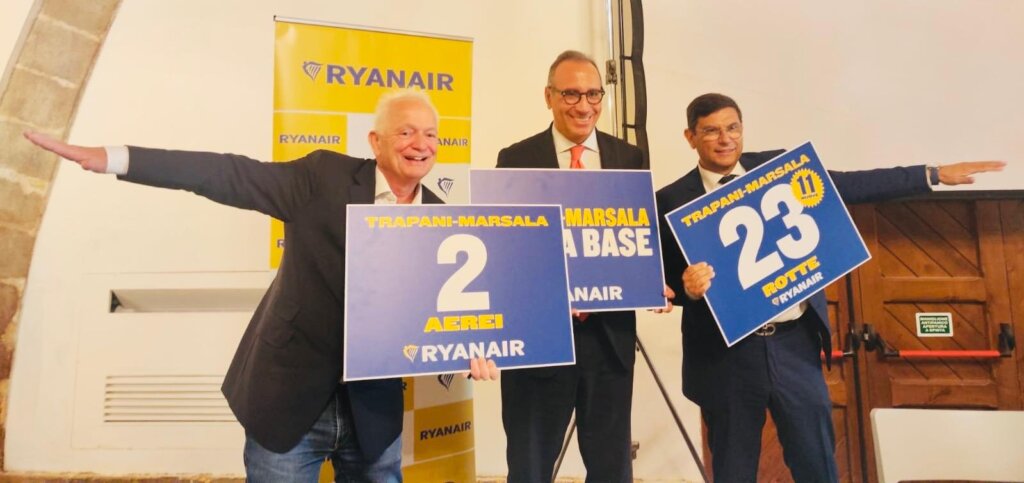
Ryanair, Europe and Italy’s No.1 airline, today (24 Sep) announced it is opening a new base at Trapani-Marsala from Jan ’26. This follows the Sicilian Region’s decision to scrap the Municipal Tax at smaller Sicilian airports. Trapani-Marsala will become Ryanair’s third Sicilian base (20th in Italy) further enhancing connectivity and the availability of low fares for Sicilian residents across the Island. This $200m new aircraft investment in Trapani-Marsala will create over 800 local jobs, 23 exciting routes, (incl. 11 new to major European destinations), and +260k (+25%) additional seats enhancing year-round connectivity, tourism, and jobs growth – all at Europe’s lowest fares.
The direct and immediate impact that reduced access costs have on airports is demonstrated by the record traffic growth Ryanair is already delivering to Abruzzo, Calabria, and Friuli-Venezia Giulia. At larger Sicilian airports (Catania & Palermo), where the Municipal Tax still applies, there remains significant potential to further increase connectivity, particularly on key routes such as Rome and Milan. Scrapping the Municipal Tax also at these airports will unlock additional capacity, attract new routes, and ensure year-round connectivity, bringing wider economic benefits to the Island.
Ryanair welcomes the efforts of President Schifani and the Sicilian Govt in enhancing regional connectivity and congratulates them on the important decision to scrap the Municipal Tax at smaller Sicilian airports. Now is the right time to take a further step and abolish the Municipal Tax at all Sicilian airports to boost year-round connectivity and deliver lower fares for Sicilian citizens and visitors. This would activate Ryanair’s Sicilian growth plan, delivering 3 million additional passengers p.a., up to 5 additional based aircraft, and creating thousands of new local jobs.
Ryanair’s new Trapani-Marsala base will deliver:
2 new B737 a/c – $200M invest. (1 in W25 and 2 in S26)
23 tot. routes, incl. 11 new to Baden-Baden, Bari, Bratislava, Bournemouth, Brussels, Katowice, London, Pescara, Saarbrücken, Stockholm & Verona.
Traffic grows to more than 1M pax p.a.
+10% increase in capacity to Rome & Milan
Supp. over 800 local jobs
Increased year-round connectivity, more tourism, more jobs and lower fares.
To celebrate its new Trapani-Marsala base, Ryanair has launched a 3-day seat sale with fares from €21.99 on sale only at ryanair.com.
In Trapani, Ryanair’s CEO Eddie Wilson said:
“As Europe and Italy’s No.1 airline, Ryanair is delighted to announce this major investment at Trapani-Marsala with the opening of a new base from Jan ‘26. We’ve worked closely with both the Regional Govt. and Airgest team to deliver this exciting investment. Since first flying to Sicily in 2003 Ryanair has carried 100 million passengers to/from Sicily, our new Trapani-Marsala base will deliver 2 new aircraft, 23 routes (11 new), more than 1 million passengers annually, and support over 800 local jobs. By connecting Trapani directly with nine countries incl. Poland, Spain, Sweden, and the UK, and with major Italian cities such as Pescara, Pisa, Turin, plus +10% incr. capacity to Milan & Rome, this new base will significantly enhance international accessibility and deliver true year-round connectivity, driving inbound tourism and ensuring Trapani and the wider region benefit from a consistent flow of visitors and sustained economic growth throughout the year.
Ryanair welcomes President Schifani and Sicilian Govt’s decision to scrap the Municipal Tax at the smaller Sicilian airports, and now is the right time to take the next step. Extending this measure to all Sicilian airports would unlock further connectivity, deliver lower fares, and strengthen year-round connectivity for Sicilian citizens and visitors. This will allow Ryanair to deliver transformative traffic, tourism, and jobs growth for Sicily, delivering 3 million additional passengers per year, 5 new aircraft, expanded routes to mainland Italy and international destinations, and thousands of new local jobs.
We also urge the Italian Government to scrap the Municipal Tax at all Italian airports to stimulate capacity, reduce fares, and drive economic growth. Should the Government act, Ryanair is ready to invest $4bn in Italy, adding 40 new aircraft, 20 million additional passengers, and over 250 new routes.”
Councillor for Infrastructure and Mobility of Sicily Region, Alessandro Arico’, said:
“A historic day for air transport in Sicily, as it marks a new and more exciting chapter in relations with one of the major international players in air travel, Ryanair. Thanks to the elimination of the municipal surtax, strongly advocated by the Schifani Government, air traffic to Sicilian airports will be incentivized by up to 5 million passengers. This will boost the economic and tourism development of the region, and above all benefit travelers, who will enjoy lower fares and new destinations made possible by the new agreement with the airline. The deal includes the establishment of a new Ryanair base in Trapani, 23 new routes, and a projected increase in passenger traffic of over 1 million by 2026. All of this is part of a broader strategy to relaunch Sicily’s airports, which also includes territorial continuity measures for Comiso (starting November 1), Lampedusa, and Pantelleria. Along with Trapani, Palermo, and Catania, these airports together form Italy’s third-largest regional airport system”.
Airgest’s President, Salvatore Ombra, said:
“The return of Ryanair’s base to Trapani Airport is not just a milestone — it is the milestone. It comes after a 10-year absence of the Irish airline from the airport, an absence that was deeply felt and had repercussions throughout the region. During the revival project of Vincenzo Florio Airport, which began six years ago, we faced all kinds of challenges — even the Covid pandemic got in the way. But what never wavered was our determination, our drive to act, and the support of an enlightened regional government that chose to stand by the people of Trapani and their airport. We were right to champion the removal of the municipal tax, and just a few months later, we are seeing the results. Ryanair has kept its commitment to base two aircraft in Birgi, which has led to an increase in routes. We would like to thank the President of the Sicilian Region, Renato Schifani, as well as the Regional Ministers for Transport, Alessandro Aricò, and for Economy, Alessandro Dagnino, who made this possible. And this is just the beginning — many more projects are in the pipeline for the modernization of the airport terminal”.
RYANAIR ANUNCIA A SUA PROGRAMAÇÃO PARA O INVERNO 2025 4 NOVAS ROTAS DO PORTO, FARO E MADEIRA
18 Sep 2025
CRESCIMENTO ZERO EM LISBOA DEVIDO A TAXAS ELEVADAS DA ANA E À FALTA DE EXPANSÃO DA CAPACIDADE DE PORTELA
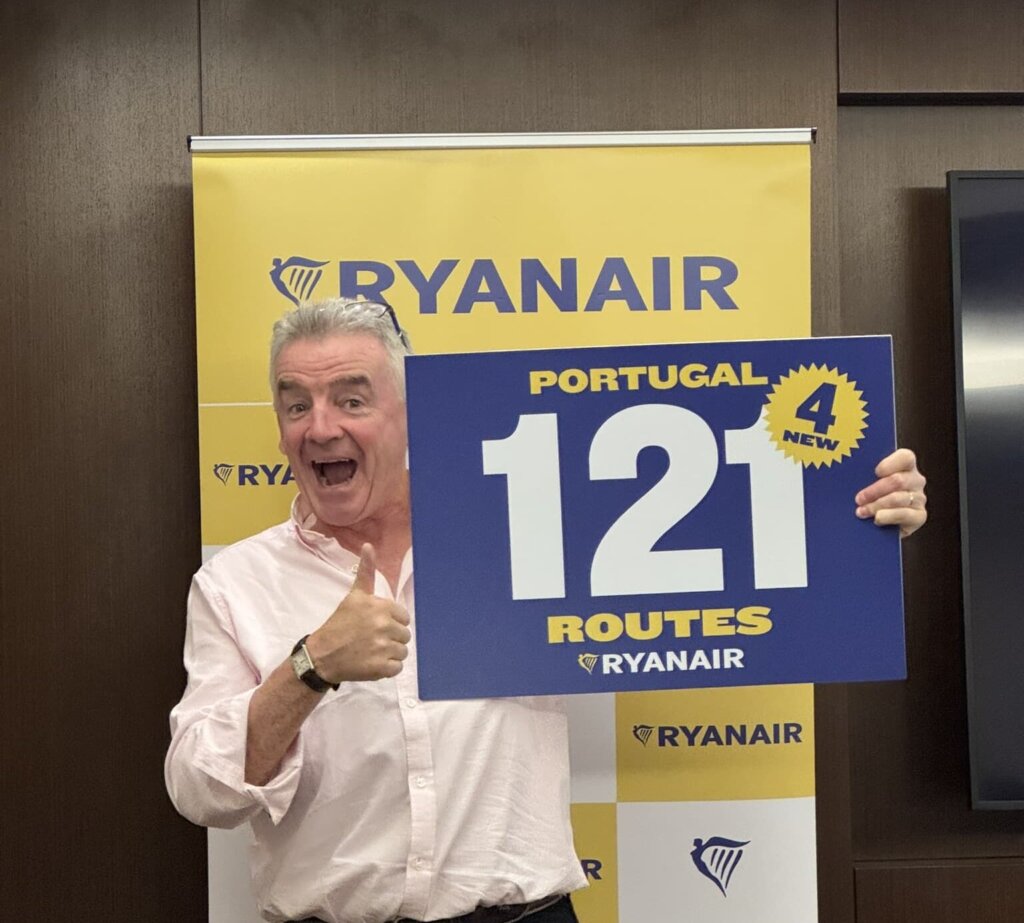
A Ryanair, a companhia aérea nº 1 da Europa, anunciou hoje (quinta-feira, 18 de setembro) a sua programação para o inverno 2025 para Portugal, com 121 rotas, incluindo 4 novas rotas emocionantes, frequências adicionais em mais de 30 rotas existentes a partir de aeroportos regionais, e a adição de 2 aeronaves em Madeira e Faro para o inverno, apoiando ainda mais o crescimento do tráfego regional.
Infelizmente, não haverá qualquer crescimento da Ryanair em Lisboa neste inverno devido às taxas excessivas e não competitivas da ANA e ao fracasso do monopólio aeroportuário em expandir a capacidade em Portela, o que impede o crescimento do tráfego, do turismo e do emprego em Lisboa. A Ryanair apela ao Governo português para expandir urgentemente a capacidade de Portela, de forma a garantir a competitividade de Lisboa, e solicita ao monopólio ANA que melhore a sua competitividade reduzindo as suas taxas excessivas, abandonando ainda a absurda proposta de fazer com que os passageiros do Aeroporto de Portela financiem o aeroporto de Alcochete, pagando taxas mais elevadas 12 anos antes de poderem utilizar o novo aeroporto.
A Ryanair continua a crescer noutros pontos de Portugal, com a expectativa de transportar 14m de passageiros (+6%) em 2025, e apresentou ao Governo português planos ambiciosos para duplicar o tráfego para 28m de passageiros por ano, com a base de mais 16 novas aeronaves Boeing MAX-10 (investimento de $1,6 mil milhões) e a criação de 500 novos empregos para pilotos, tripulação e engenheiros portugueses até 2030. Este crescimento, no entanto, depende de o Governo aumentar a capacidade de Portela e da ANA reduzir as suas taxas excessivas – medidas que estimulam o crescimento do tráfego, do turismo e do emprego em toda a economia portuguesa.
O CEO da Ryanair, Michael O’Leary afirmou:
“A Ryanair continua a crescer nos aeroportos regionais de Portugal neste inverno, operando 121 rotas, incluindo 4 novas (Porto–Gotemburgo e Varsóvia, Faro–Cracóvia e Madeira–Shannon), adicionando frequências em mais de 30 rotas existentes, e baseando 2 aeronaves adicionais (investimento de 200m de dólares) neste inverno em Madeira e Faro. Infelizmente, não há crescimento em Lisboa, devido às taxas excessivas do monopólio da ANA e à sua repetida falha em aumentar a capacidade de Portela.
Apelamos ao Governo para expandir urgentemente a capacidade da Portela e obrigar o monopólio ANA a reduzir as suas taxas excessivas e a abandonar o seu plano absurdo de fazer com que os passageiros da Portela paguem taxas mais elevadas para cobrir o custo do muito atrasado aeroporto de Alcochete. Alcochete só deverá ser financiado pelas companhias aéreas e passageiros que o utilizarem a partir de 2037.
A Ryanair é a companhia aérea que mais cresce na Europa e a única grande companhia a apresentar um rápido crescimento pós-Covid em Portugal. Podemos duplicar o tráfego português para 28 milhões de passageiros por ano nos próximos 5 anos, criando crescimento económico e de emprego significativo. Mas sem ação urgente do Governo e da ANA, este crescimento irá para aeroportos de menor custo e para outros países da Europa.”